
Mobility aids and other accessories for Parkinson disease
24-06-24
Having Parkinsons disease (PD) can make ordinary tasks difficult. As the condition worsens, it may become more challenging to carry out daily duties because of the motor symptoms, which include tremors, trembling, stiffness, sluggish motions, and shaky balance.

However, a variety of assistive technologies are available to make daily tasks simpler. These tools can enhance a person's home safety and lower the chance of falls.
Mobility aids
Walkers or canes can offer more stability when walking for those with Parkinsons disease who gain a shuffling stride or trouble balance.
Tripod or quad canes are less effective for PD patients than straight canes.
Four-wheeled walkers, as opposed to those that require to be lifted, provide greater stability for those with Parkinsons disease. A wheelchair or electric scooter may be required for patients with late-stage Parkinsons disease (PD) to get around.
Read more about Innovative devices - Health & safety of elderly persons.
Eating implements
Several businesses have created utensils that facilitate eating for those who experience the tremor or shakiness associated with PD.
Some utensils feature larger, heavier handles that are simpler to grip.
Cutting food is simpler with knives that are cut by rocking, like the Rocker Knife. Using travel cups with lids and/or straws, as well as plates with a scooped edge to prevent spills, is another tip that many people with PD find useful.
Dressing
PD makes getting dressed difficult, especially securing zippers, buttons, and shoes. Among the helpful assistive technologies are:
-
Weighted Button Aid
-
Zipper pulls
-
Magnetic buttons:
-
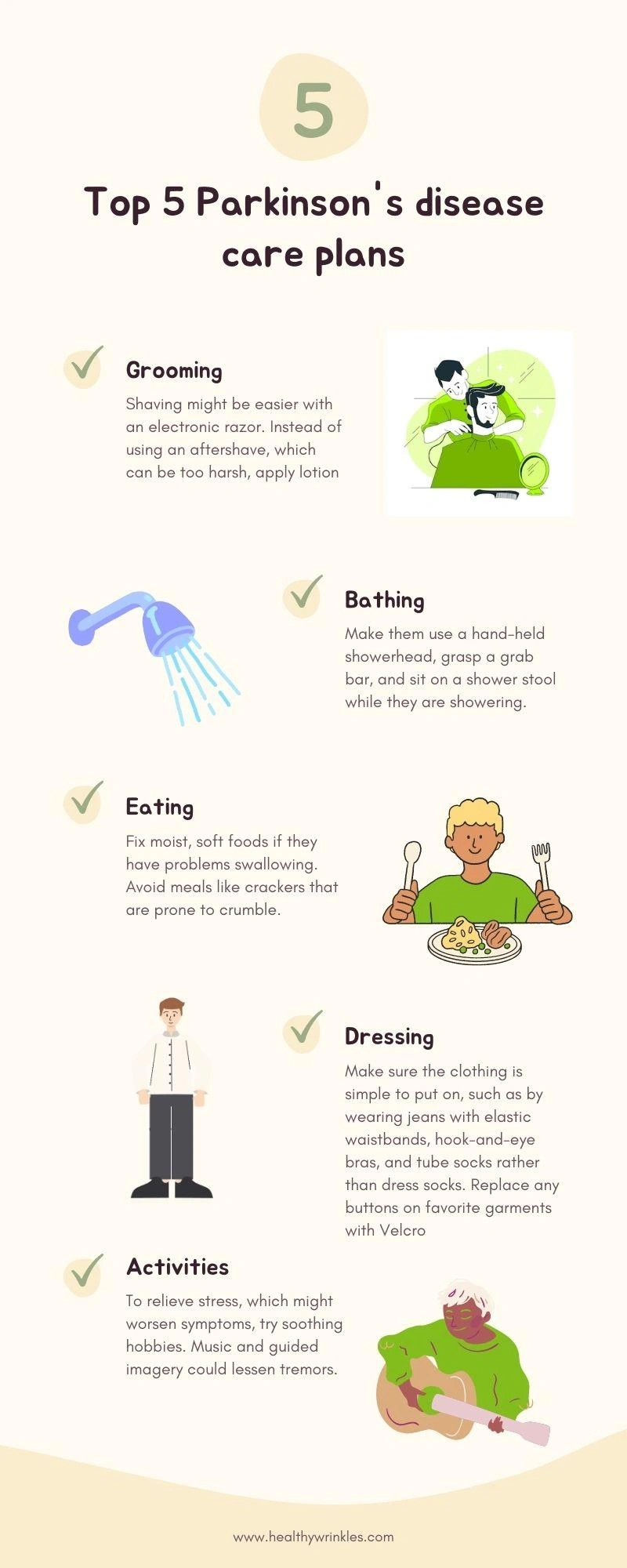
It is simpler to fasten shoes with Velcro or elastic laces than with laces.
Support in the restroom
There are a variety of aids that can help make using the restroom safer and easier.
To make it simpler for a person with PD to enter and exit a tub or shower, bars or handrails might be placed. It's also a good idea to use non-skid mats or decals to lower the chance of slipping. Besides raised toilet seats or grab bars near the toilet, tub chairs or benches might make it simpler to sit down and stand up.
Daily grooming is made simpler with electric toothbrushes and razors, and we can place touch taps that switch on the water with a simple touch when turning handles becomes challenging.
Instruments for writing
It's difficult to grasp and use a writing utensil because of the motor symptoms of PD. Writing implements that are simpler to hold and Weighted Universal Holders, most majority of rounded objects, like a pen, pencil, or toothbrush, are available to make it simpler.
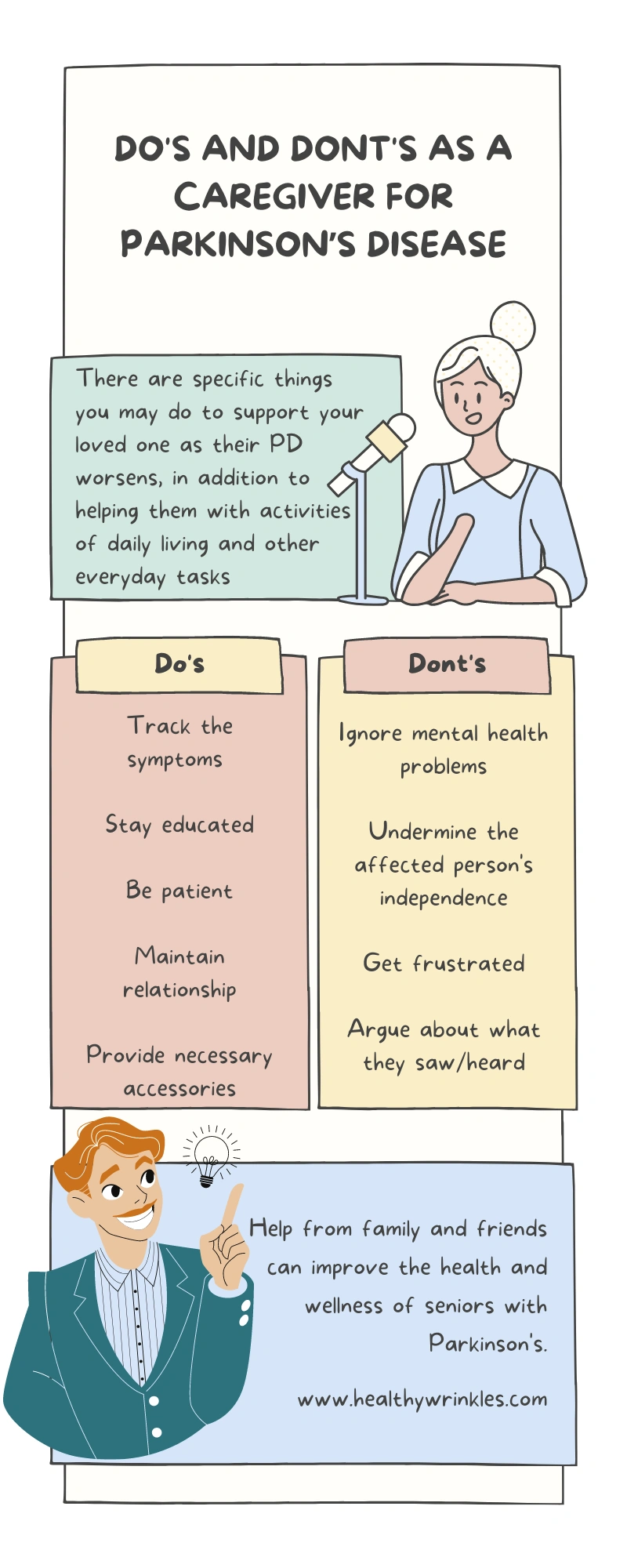
There are numerous mobility and other accessories to make the lives of seniors with Parkinson’s easier. It is the responsibility of the caregiver and the doctors to assist and provide seniors with a suitable device that makes their life less complicated. Read more on What to Avoid As a Caregiver for Parkinson’s Disease.
Whether you are searching for informative articles, or looking for healthcare providers, Healthywrinkles is an excellent resource for all your senior care needs. We also have a great compilation of all the medical expert talks for healthy aging on Healthy Wrinkle YouTube channel.
How to Choose the Right Mobility Aids for Parkinson's Disease
Choosing the right mobility aids for Parkinson's disease depends on the stage of the condition, balance ability, and the specific challenges a person faces day to day. The best mobility aids for Parkinson's are usually recommended after an assessment by a physiotherapist or occupational therapist, who can match the device to gait pattern, freezing episodes, and fall risk rather than relying on a one-size-fits-all solution.
Assistive Devices for Parkinson's Disease Beyond Mobility
Alongside walkers and canes, a wide range of assistive devices for Parkinson's disease can support daily living, from adapted eating implements to dressing aids and bathroom safety equipment. These Parkinson's disease daily living aids reduce strain on caregivers and help seniors retain a greater sense of independence at home.
When to Introduce Walking Aids for Parkinson's Disease
Walking aids for Parkinson's disease are typically introduced as soon as shuffling steps, reduced arm swing, or occasional loss of balance start affecting safety, rather than waiting for a fall to occur. Early use of a cane or four-wheeled walker, alongside regular physiotherapy, can help maintain confidence and mobility for longer.
Caring for a Loved One with Parkinson's Disease at Home
Combining the right Parkinson's disease home care aids with professional support, such as a visiting physiotherapist or trained home nurse, makes it easier for families to manage day-to-day care. Investing in assistive technology for Parkinson's disease early, rather than after a crisis, gives both the senior and their caregivers more time to adapt safely.
Disclaimer: Healthy Wrinkles does not recommend or offer any medical diagnosis, treatment, or advice. The information provided here is only for the awareness of disease or ailment among individuals, caregivers, and the public. The advice of doctors, licensed professionals, or therapists who are knowledgeable about your particular situation should always be sought before using the information provided here. It should also not be used in the event of a medical emergency or for the diagnosis or treatment of any medical condition. If you want urgent assistance, contact a qualified medical professional. Additionally, the information represents the author's views and not those of Healthy Wrinkles.