






















Try these 5 games in your old age to have fun
01-10-24
5 games for engaging seniors and having fun
As you grow older, your physical capacity may change. You may not be able to perform certain activities due to existing physical conditions like back pain, joint pain, fatigue, etc. Similarly, your mental health takes a toll and you may find yourself thinking negative thoughts, staying isolated and losing interest in doing things.
At a young age, you may catch up with your friends and family for meetups or to play some games, but, can you do the same thing in your old age? Playing games can do more than help you socialise, like improving your memory and cognitive skills. Want to know some fun games for your later life? Read on!
Why Games for Old Age Matter More Than You Think
The need for play does not disappear with age — it simply changes shape. Games for old age are not just about passing time. Research consistently shows that regular participation in mentally stimulating games for elderly people helps maintain cognitive reserve, slows the progression of age-related memory decline, and reduces the risk of depression and anxiety.
For seniors living in old age homes or assisted living facilities, structured games and group activities are a cornerstone of daily life. Old age home games create a sense of community, give the day a rhythm, and provide a reason to look forward to the afternoon. Whether it is a weekly card game, a daily crossword, or a monthly quiz evening, these moments of play carry real health value.
The good news: fun games for old people do not need to be complicated, expensive, or physically demanding. The right game simply needs to be engaging, social where possible, and suited to the senior's current abilities and interests.
Engagement for Seniors
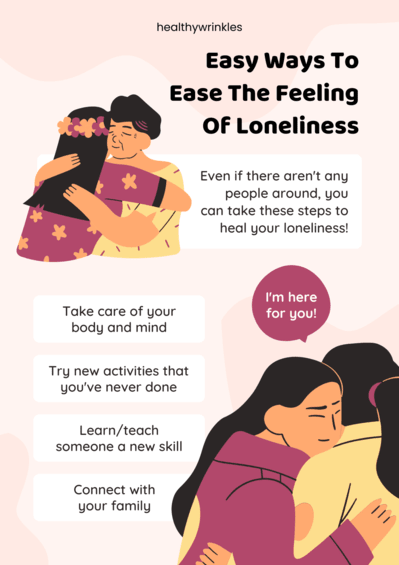
As an older adult, your social life may have slowed down with minimum interactions with people. However, research suggests that being engaged as a senior leads to better physical and mental health. Being socially engaged is strongly linked to improved brain function as we get older.
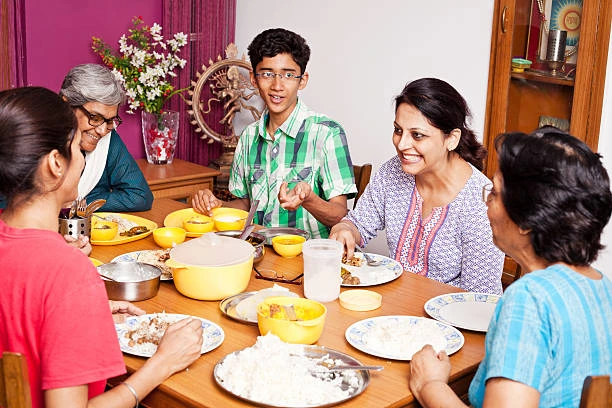
You can promote healthy ageing by engaging in social and other enjoyable activities. Games are a great way to interact with friends, family and the senior community where seniors like you can come together to play fun games. Games for old age can promote cognitive, social and emotional benefits to all.
Benefits of playing games for seniors
Games, especially brain games, provide benefits like
➔Providing a workout to your mind and enhancing your cognitive functions
➔Helping you socialize and avoid isolation by engaging with the community and stimulating multiple cognitive systems at the same time
➔Creating hope and optimism for seniors, especially for those who are retired or are dealing with illness
➔Forming new brain connections
Games for Elderly People — The Health Benefits in Detail
While the benefits of games for elderly people are widely acknowledged, it helps to understand specifically what happens in the brain and body when seniors play regularly:
-
Memory strengthening — Card games, board games, and puzzles all require working memory — remembering what cards have been played, tracking the board state, holding partial solutions in mind. Regular use of working memory is one of the most effective ways to maintain cognitive sharpness as we age.
-
Slowing cognitive decline — Games that involve strategy — chess, rummy, bridge — require forward planning and decision-making. These activities keep the prefrontal cortex active, the area of the brain most associated with reasoning and problem-solving.
-
Reducing isolation — Playing games with others — whether in person or through digital platforms — reduces feelings of loneliness. For seniors who live alone or in old age homes, group games are one of the most accessible forms of regular social interaction.
-
Physical coordination — Physical games like passing the parcel or gentle movement-based activities improve coordination, reaction time, and body awareness — contributing to fall prevention, which is a critical concern for older adults.
-
Mood and self-esteem — Completing a puzzle, winning a card game, or mastering a new digital game gives seniors a genuine sense of achievement. This matters enormously for self-esteem, particularly after retirement or during recovery from illness.
5 fun games for elderly people
1.Passing the parcel - A parcel, usually a ball or a pillow is passed between a group of friends while music is played. Once the music stops, the person holding the parcel is out.
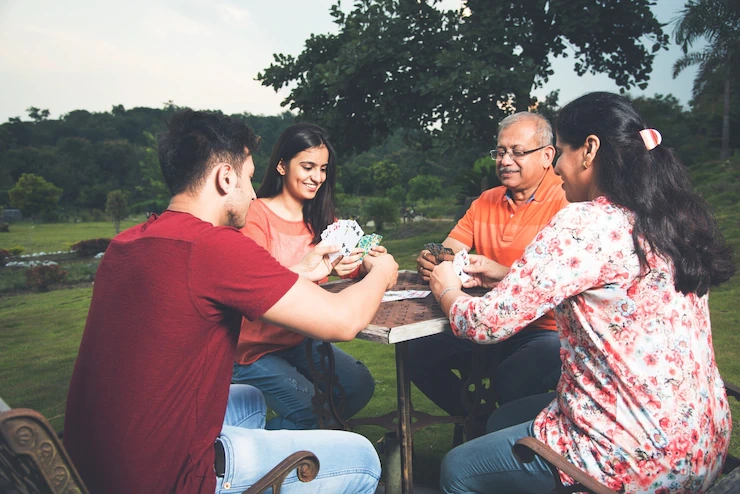
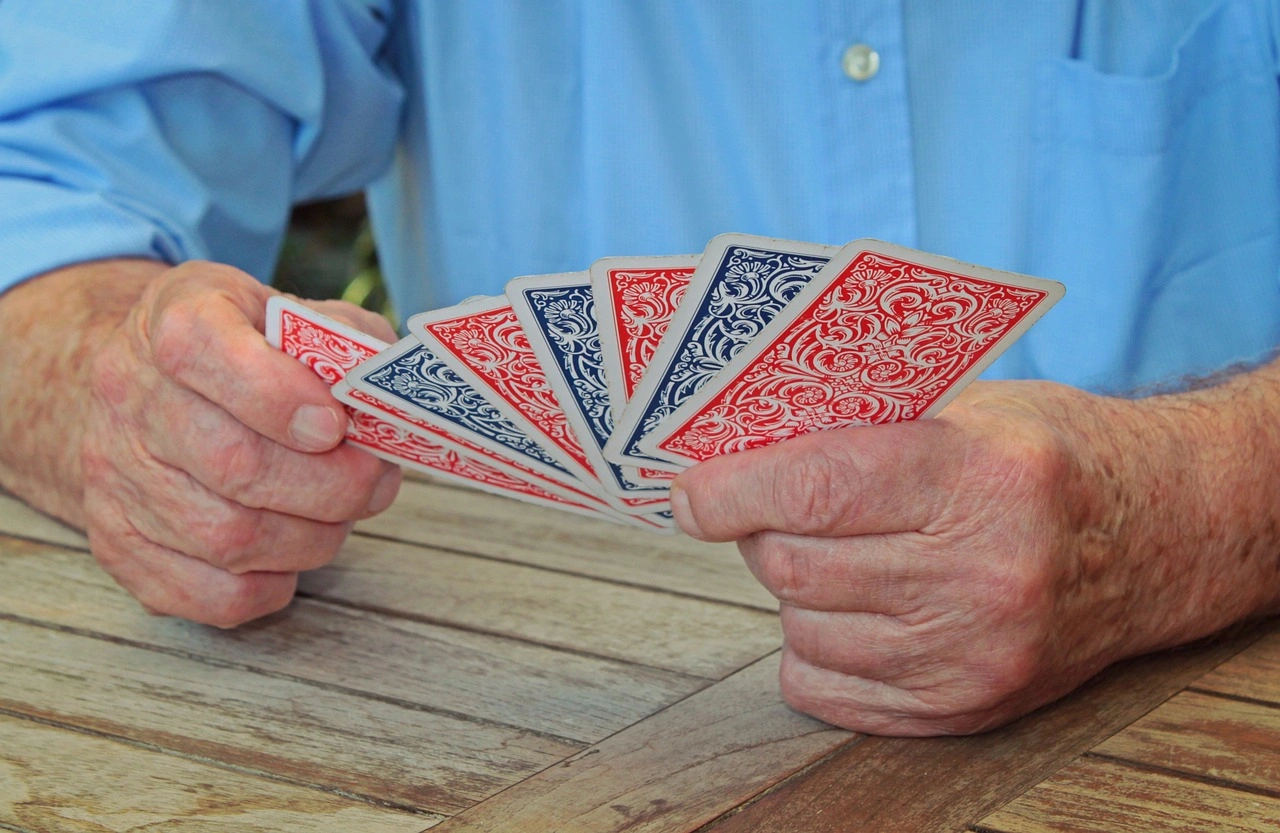
2.Card games - Many types of card games are popular among older adults. You can play bridge which helps to keep your brain sharp. You can also try card games like rummy, not-at-home and UNO
3.Board games - Board games are played on tables without the need for electronics. They are thus referred to as "unplugged games." Playing board games can also help develop memory and improve cognitive function. When compared to other game genres, board games give players real-life experiences that boost the desire to participate and encourage higher-order thinking. Examples of board games are chess, monopoly, scrabble and bingo.
4.Puzzles - Solving a puzzle is probably the most exciting game that anyone can play. They are like brain teasers. You can try crossword puzzles, jigsaw puzzles, or even Sudoku. Attempting a crossword puzzle requires you to use verbal memory as you look for words that fit descriptive phrases with a specific number of matching letters. Jigsaw puzzles, no matter how simple or complex, allow players to exercise their "visual-spatial working memory" abilities by identifying and recalling which pieces fit into spaces with similar shapes.
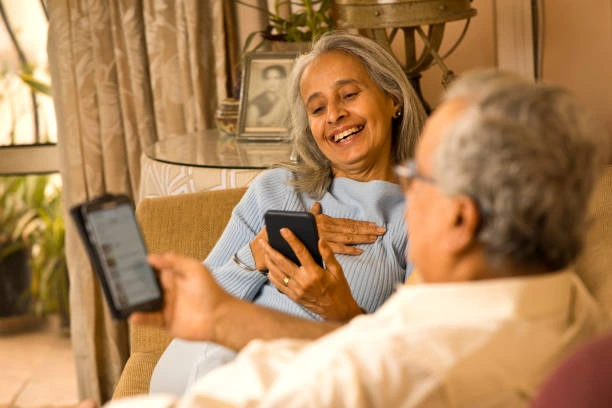
5.Digital games - According to a University of York study, older adults' memory and concentration can be enhanced by playing digital puzzle games. Numerous online brain games are available on a subscription basis. Usually, elements like words, numbers, colours and shapes are found in these games with a time limit that makes them engaging and fun. Video games too are beneficial. These days even seniors can be seen engrossed in their mobiles. Many gaming applications and online games can easily be played by seniors on their mobiles. Examples include Solitaire and Candy Crush.
More Games for Old People — Beyond the Basics
The five games above are a strong starting point. But there is a much wider range of fun games for older adults that suit different physical abilities, group sizes, and interests. Here are more options worth exploring:
-
Traditional Indian games — Antakshari, Tambola (Housie), and Dumb Charades have been staples of Indian family gatherings for generations — and they translate naturally into group games for seniors in old age homes and day centres. They require no equipment, minimal physical effort, and create genuine laughter and connection.
-
Quiz games — A simple quiz with categories like Bollywood songs, geography, current events, and history works wonderfully as a fun game for old people. It can be played in small groups and is easy to run in old age homes without any special equipment.
-
Storytelling and memory sharing — Reading a short story together and discussing it, or writing and sharing a memory from childhood, are gentle cognitive activities that work particularly well for seniors who find competitive games less appealing. These are especially effective games to play with elderly individuals who have mild memory challenges.
-
Word games — Word games like Antonym-Synonym, Scrabble, Bananagrams, and simple crossword competitions keep language skills active and are among the most recommended geriatric games by occupational therapists and dementia counsellors.
-
Gentle physical games — Chair yoga, balloon volleyball, and ring toss are physically gentle enough for most seniors but provide the added benefit of movement and coordination. These are popular old age home games because they can be adapted for seniors with limited mobility.
Games to Play With the Elderly — A Guide for Families and Caregivers
Finding games to play with the elderly — especially during visits, family gatherings, or while caring for an elderly parent at home — can sometimes feel uncertain. Here is a practical guide for families:
-
Choose the right pace — Avoid games that are too fast-paced or rely on rapid reflexes, as these can create frustration rather than enjoyment. Opt for turn-based games, cooperative puzzles, or storytelling activities where time pressure is low.
-
Start with what they know — Many older adults have fond memories of specific games — rummy, carom, chess, Antakshari. Starting with a game your parent or grandparent already knows reduces the cognitive load of learning rules and immediately creates positive association.
-
Adapt for ability — The goal is connection and enjoyment, not winning. Gently adjust rules if needed — shorter rounds, fewer cards, simpler puzzle pieces — to ensure the senior feels capable and successful rather than frustrated.
-
Make it regular — Regular short sessions (30–45 minutes, two to three times a week) are more beneficial than occasional marathon sessions. Consistency builds anticipation and routine, which is particularly important for seniors with mild cognitive impairment.
-
In assisted living settings — Families of seniors living in assisted living facilities or old age homes can speak to care coordinators about joining or supporting group game sessions during visits. Participating in games to play with seniors in a group setting is one of the most enriching things a family member can do during a visit. Most assisted living Mumbai communities run daily activity calendars with games, music and quizzes. Ask for the weekly schedule before you decide.
Conclusion:
The rising age of an individual may lead to isolation and reduced social engagement. Being engaged has many benefits like improved health and brain function. Games can serve as a good way to engage seniors and help them utilise their brain power while engaging with the community. As a senior, you can play different games like chess, Sudoku, bingo, rummy, video games, and so on. Don’t let old age stop you from having fun. After all, age is just a number! Want to learn more about caring for and managing seniors in your family? Check out our article on senior care here
https://www.linkedin.com/pulse/caring-managing-seniors-family-healthy-wrinkles-private-limited/?trackingId=R6BjGta0YsL7EpzrFW%2FLlA%3D%3D
Whether you are searching for informative articles, or looking for listings of senior care service providers, Healthy Wrinkles is an excellent resource for all your senior care needs. We also have a great compilation of all the medical expert talks for healthy ageing on the Healthy Wrinkle YouTube channel.
Disclaimer: Healthy Wrinkles does not recommend or offer any medical diagnosis, treatment, or advice. The information provided here is only for the awareness of disease or ailment among individuals, caregivers, and the public. The advice of doctors, licensed professionals, or therapists who are knowledgeable about your particular situation should always be sought before using the information provided here. It should also not be used in the event of a medical emergency or for the diagnosis or treatment of any medical condition. If you want urgent assistance, contact a qualified medical professional.
References:
1.Are you engaged? From https://www.cdc.gov/aging/publications/features/social-engagement-aging.html#:~:text=Research%20has%20shown%20that%20for,it%20is%20good%20for%20you!
2.Participating in Activities You Enjoy As You Age from https://www.nia.nih.gov/health/healthy-aging/participating-activities-you-enjoy-you-age
3.Squire K, Wells G, Anderson-Coto MJ, Steinkuehler C. Casual Games, Cognition, and Play Across the Lifespan: A Critical Synthesis. ACM Games: Research and Practice. 2023.
4.Engaging in digital puzzle games could potentially benefit memory functions among older adults: Study from https://www.hindustantimes.com/lifestyle/health/engaging-in-digital-puzzle-games-could-potentially-benefit-memory-functions-among-older-adults-study-101692179727779.html
5.6 Brain Exercises For Seniors To Try from https://www.forbes.com/health/healthy-aging/brain-exercises/
https://healthywrinkles.com/blog/healthy-aging/eksela-sita-te-ji-pe-ca-smarta-pravasa
Frequently Asked Questions — Games for Elderly People
What are the best games for old age people to play at home?
The best games for old age at home are ones that match the senior's physical ability and cognitive level. Puzzles (jigsaw, crossword, Sudoku), card games like rummy or solitaire, and board games like chess or scrabble are all excellent choices. For seniors with limited mobility, digital games on a tablet or mobile — including brain training apps and simple casual games — are ideal. The key is regularity and enjoyment, not complexity.
What are some fun games for elderly people in old age homes?
Old age home games that work well in group settings include Tambola (Housie), Antakshari, quiz evenings, passing the parcel, bingo, Dumb Charades, and carom. These are social, require minimal physical effort, and are easy to organise without special equipment. Word games and storytelling circles are also popular and particularly effective for residents with mild cognitive challenges.
What games can I play with elderly parents or grandparents during visits?
Good games to play with the elderly during family visits include card games like rummy or UNO, board games like Ludo or Scrabble, simple jigsaw puzzles, or a family quiz using topics your relative enjoys (Bollywood, history, geography). Storytelling — sharing and recording family memories — is also a deeply meaningful activity that does not feel like a "game" but provides all the same cognitive and emotional benefits.
Are digital games good for seniors?
Yes. Research supports the use of digital puzzle games and brain training apps for maintaining memory and concentration in older adults. Games like Solitaire, Sudoku apps, word games, and light puzzle games are all appropriate for most seniors. For those new to smartphones or tablets, starting with one simple game and building familiarity gradually works best. Many seniors in India are now active mobile gamers — the barrier to entry is lower than families often assume.
What are geriatric games and who recommends them?
Geriatric games is a term used by occupational therapists and dementia care specialists to describe games specifically designed or selected for older adults — focusing on cognitive stimulation, fine motor skill maintenance, and social engagement rather than competition or speed. Word games, memory card matching, gentle physical games, and group music activities all fall under this category. Geriatricians and dementia counsellors at facilities like those listed on Healthy Wrinkles often incorporate structured game sessions into their care plans.
How does Healthy Wrinkles support senior engagement and care?
Healthy Wrinkles is a verified senior care platform with over 4,500 listed service providers across Mumbai, Thane, Navi Mumbai, Pune, and other cities. Beyond home nursing, assisted living, and physiotherapy, Healthy Wrinkles connects families with senior clubs and day centres where group activities — including games, outings, and social events — form the core of daily programming. Call 9967913884 or visit www.healthywrinkles.com to explore options near you.