


























Decide Senior Care Options for Parents in India
12-10-24
How to Decide Senior Care Options for Your Parents in India: A Guide for the Caregiving Generation
Caring for aging parents can be both rewarding and challenging. As our parents grow older, they may require different levels of care and support, and it's up to us, the caregiving generation, to ensure they receive the best possible care. With the growing number of senior care options available in India, it can be difficult to know which one is right for your loved ones. This blog post will explore the various senior care options and provide guidance on how to choose the most suitable one for your parents.
Remember, choosing the right senior care option can feel overwhelming, but you don’t have to do it alone. Get support from expert who can help you. Find expert at the end of the blog post.
How to Choose the Right Health Care Facility for Elderly Parents in India
Choosing the right health care facility for elderly parents in India is one of the most significant decisions a family will make. The options have expanded considerably — from home-based caretaker services to premium assisted living campuses — but more options also means more confusion. The right starting point is not comparing facilities but understanding your parent's actual needs.
Ask three questions before you look at any facility or service:
-
Can my parent manage daily activities independently?: If yes, home care services in Mumbai or a retirement community may be sufficient. If no, assisted living or a nursing home with medical support becomes necessary.
-
Does my parent have a diagnosed condition requiring medical monitoring?: Conditions like Parkinson's, dementia, post-surgical recovery, or advanced diabetes require care environments with trained nursing staff — not just companionship or general caretaker services.
-
What is the preferred living situation?: Some seniors adapt well to community living. Others experience significant distress when moved from home. Respecting this preference early prevents difficult reversals later.
1. Home Care Services
Many families prefer to keep their elderly loved ones at home, where they can remain in a familiar and comfortable environment. Home care services are designed to provide support to seniors who need assistance with day-to-day tasks or medical care. Here are some options:
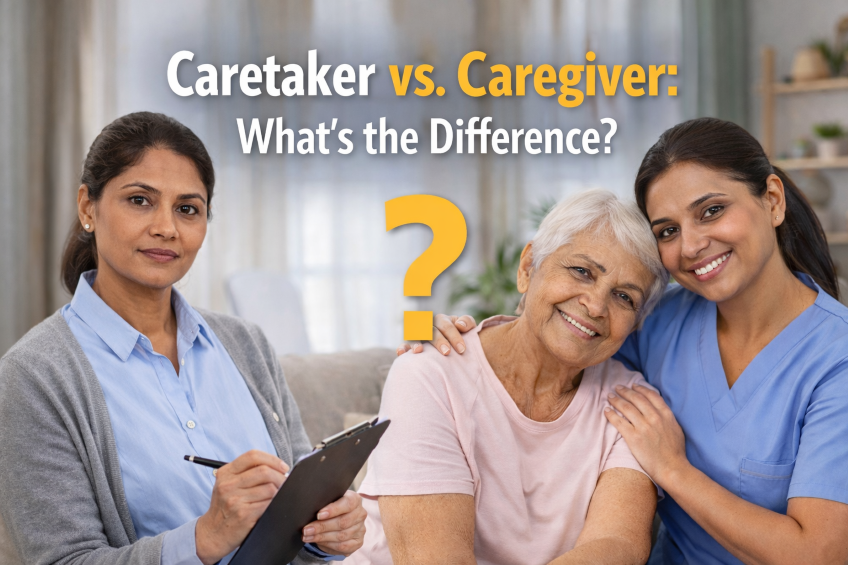
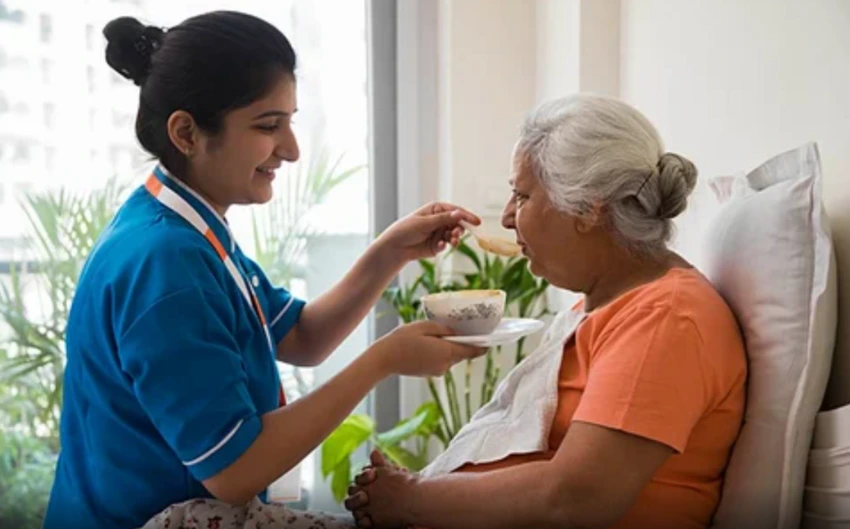
- Caretakers and Companionship: These services are ideal for seniors who need help with daily activities like bathing, dressing, cooking, and companionship. This can be particularly helpful for seniors who may feel isolated or lonely.
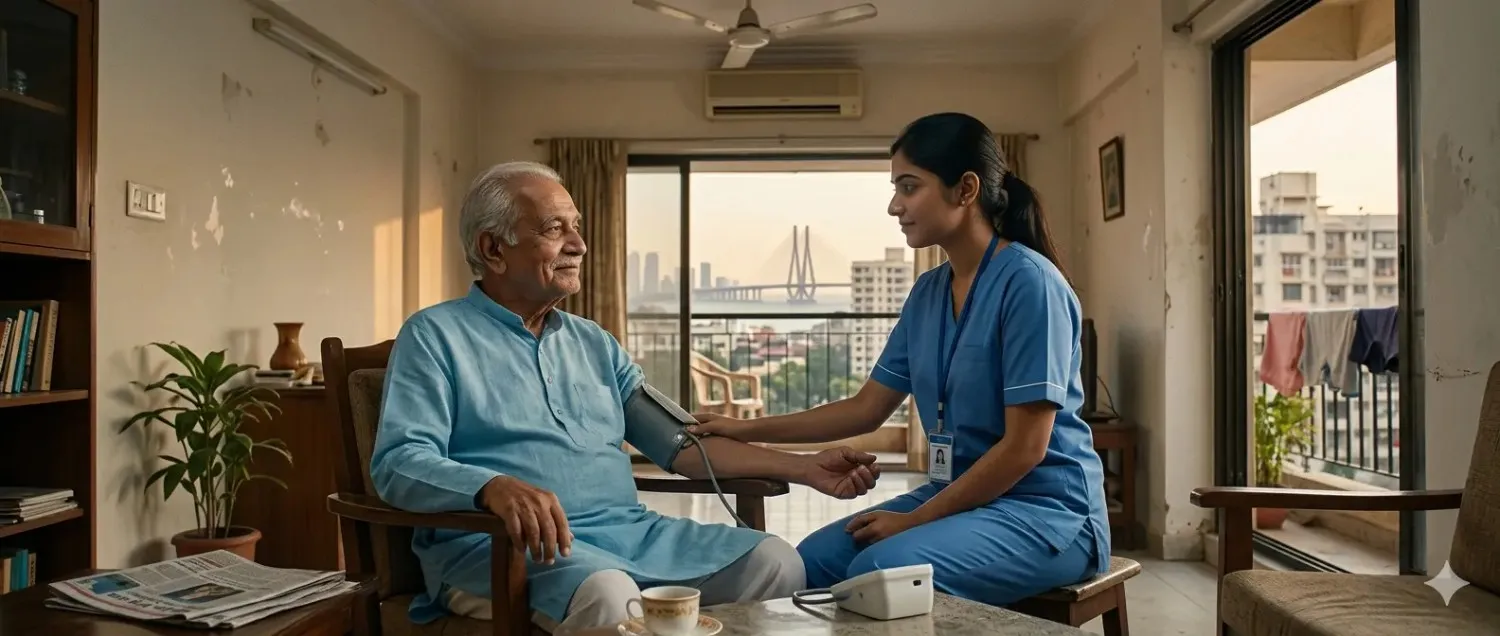
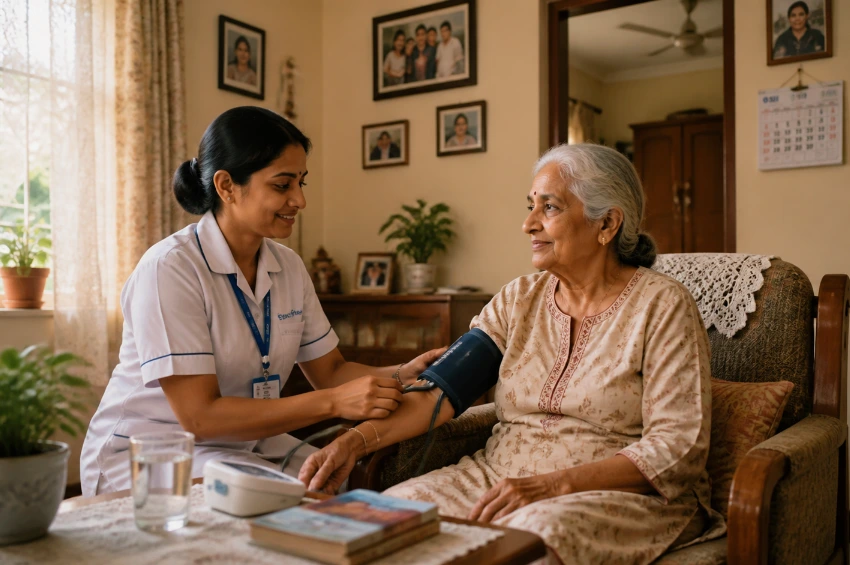
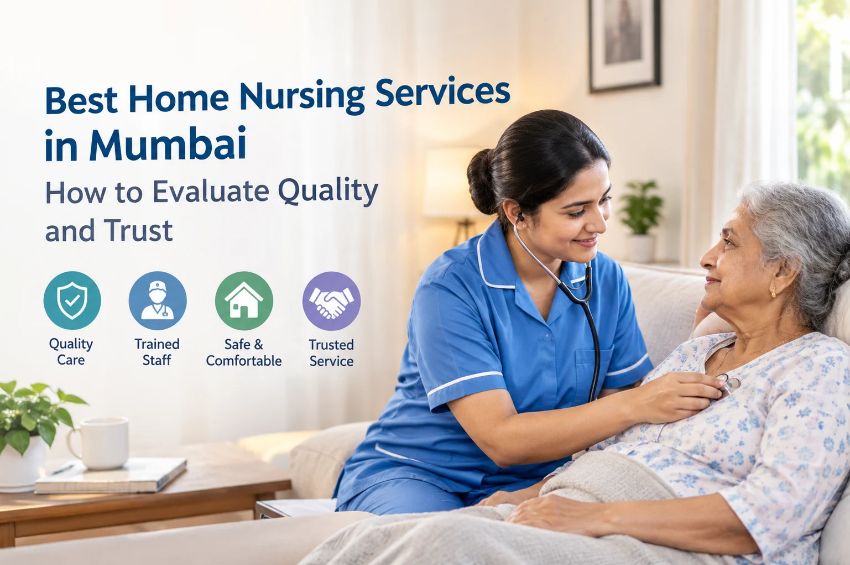
- Professional Nurses and Doctor on Call: If your parent has medical needs that require attention, professional nursing services can ensure they receive the care they need without the hassle of hospital visits. Many services also offer doctors on call for consultations at home.
- ICU at Home Services: For seniors with critical health conditions, ICU at home services provide a full range of medical equipment, infrastructure, and expert supervision. While more expensive, this option allows seniors to receive hospital-grade care from the comfort of home, often reducing the need for extended hospital stays.
Elderly Care Services in Mumbai — What's Actually Available
Mumbai has one of the most developed elderly care ecosystems in India, with services ranging from basic home support to specialised dementia care. Here is a clear breakdown:
-
Home-based elderly care services in Mumbai: These cover caretakers, trained nurses, physiotherapists visiting at home, and doctor-on-call. These are suitable when the senior is medically stable and primarily needs help with daily tasks, medication management, or recovery support after hospitalisation.
-
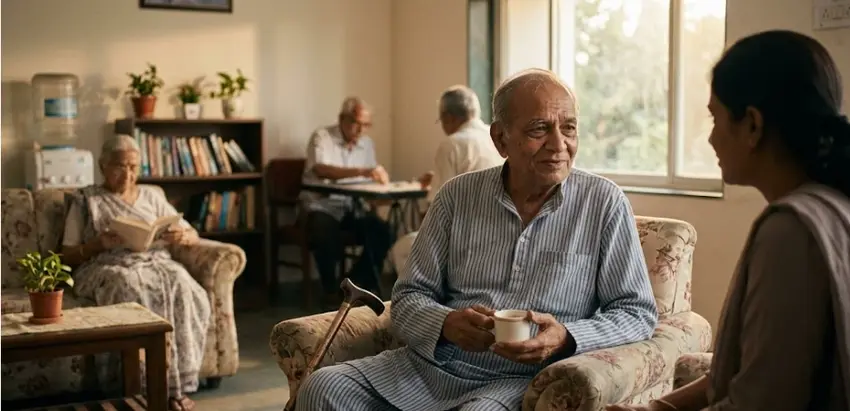
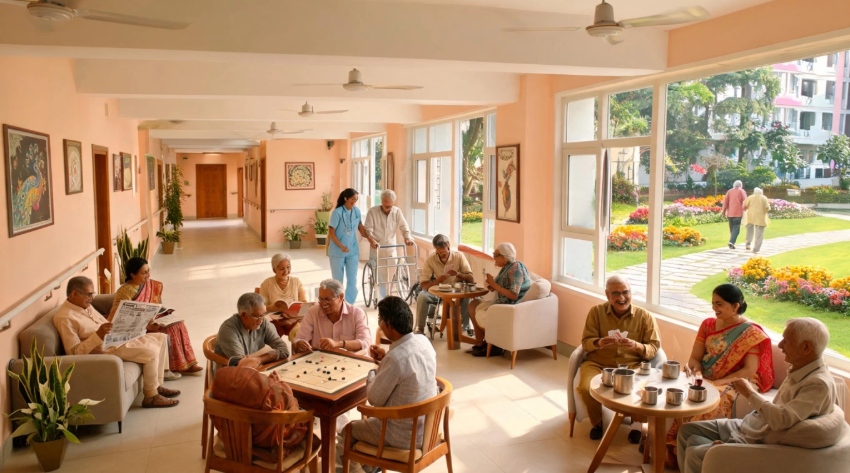
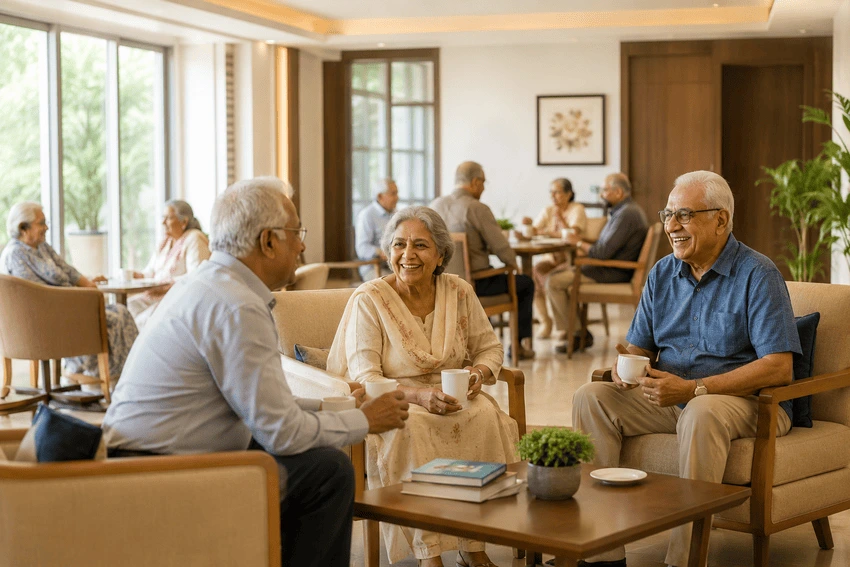
Assisted living old age homes: These provide a structured environment with meals, housekeeping, recreational activities, and 24-hour supervision. They are not hospitals — they are residential facilities for seniors who need support but not intensive medical care. Mumbai has options across a wide range of budgets, from charitable homes to premium gated campuses.
-
Elderly homes in Mumbai: These range from large community residences with 50+ residents to smaller boutique homes with 10–15 residents where personalised attention is higher. Families should evaluate staff-to-resident ratios, medical tie-ups, emergency response protocols, and visiting hours before deciding.
-
Luxury old age homes and premium assisted living in Mumbai: These facilities offer significantly higher standards — private rooms, specialised cuisine, fitness and wellness programmes, and dedicated social engagement staff. These are appropriate for seniors who value comfort and privacy and whose families can support the higher monthly cost.
-
Dementia homes: These are secured facilities with trained staff for seniors with moderate to severe cognitive decline. Standard old age homes are not equipped for wandering, behavioural changes, or the safety requirements of dementia care. If your parent has been diagnosed with dementia or Alzheimer's, this is the category to evaluate separately.
2. Living Outside Home
If your parent’s needs exceed what home care can provide, you may want to explore other senior living options:
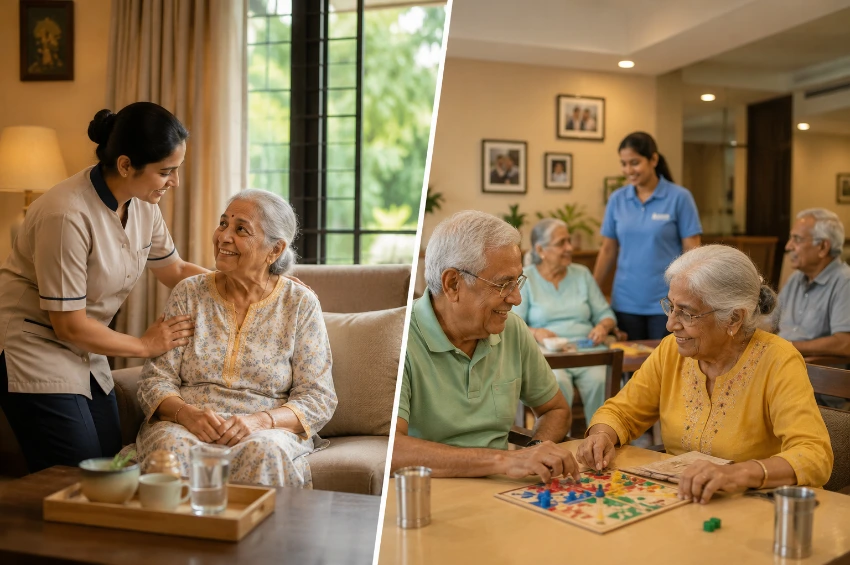
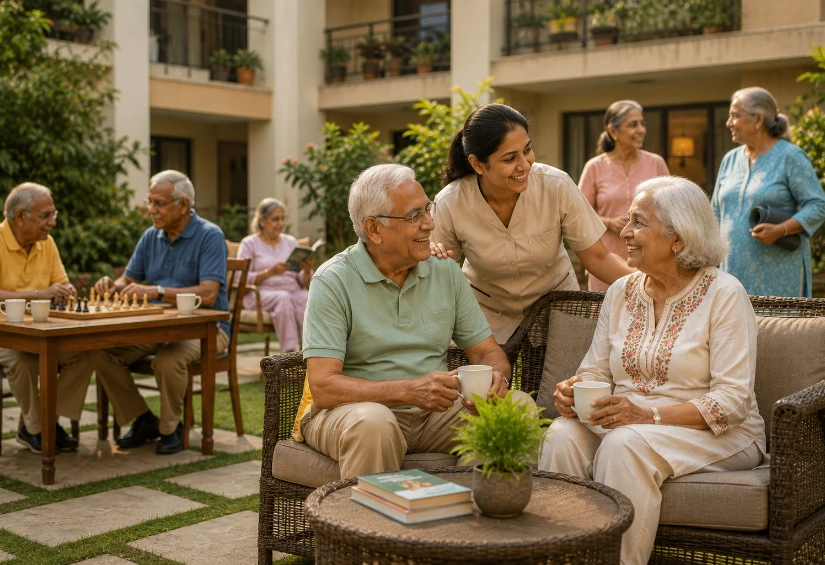
- Assisted Living: This option is ideal for seniors who require assistance with daily tasks but do not need constant medical care. Assisted living facilities provide personal care, housekeeping, and meals while promoting independence.
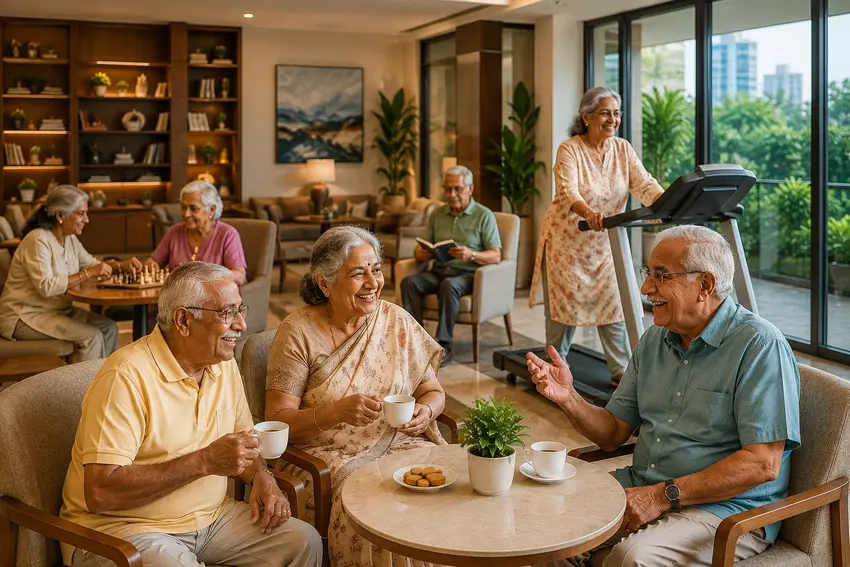
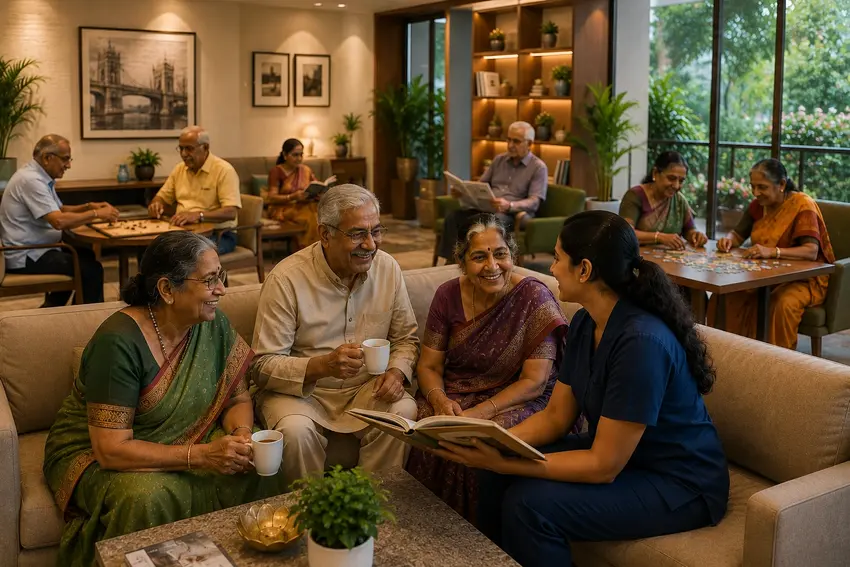
- Premium Assisted Living: For those looking for a more upscale environment with added amenities, premium assisted living facilities offer a higher standard of care and services, including access to leisure activities and recreational programs.
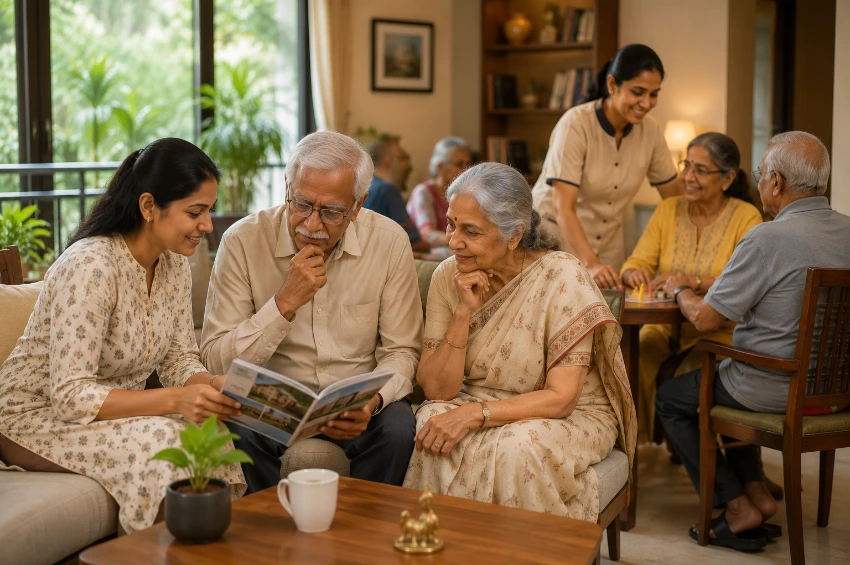
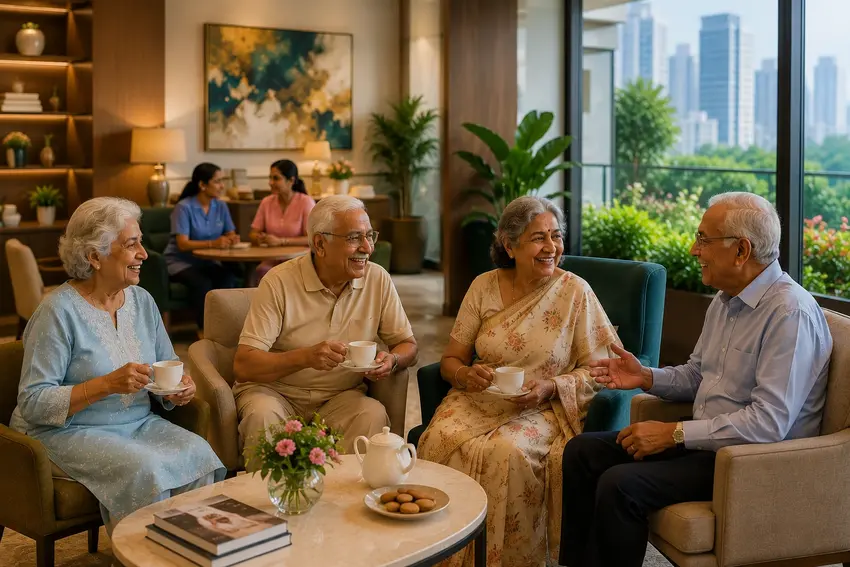
- Retirement Living Communities: These communities are perfect for seniors who are still active and independent but want the peace of mind that comes with access to support services if needed. These communities often offer social activities, medical care, and a sense of community among other seniors.
- Day Centers: Day centers are a great option for seniors who need supervision or companionship during the day while their family members are at work. These centers provide a safe environment where seniors can participate in activities and socialize with others.
Home Care Services Mumbai — When Is It the Right Choice?
Home care services in Mumbai are the right choice when the senior is medically stable, mobile enough to live at home safely, and emotionally attached to their home environment. Home care also works well as a bridge — after a hospitalisation, before a move to assisted living, or when the family is present part of the time and needs professional support for the remainder.
The key is matching the type of home care service to the actual need:
-
General caretakers: Handle bathing, dressing, meal preparation, medication reminders, and companionship. They are not medically trained and should not be expected to manage wounds, IVs, or clinical assessments.
-
Care taker services in Mumbai: Range from placement agencies (who send general helpers) to nursing bureaus (who deploy trained nursing staff). The distinction matters. A nursing bureau in Mumbai operates under a structured system — nurses are typically registered, and the bureau remains accountable for their conduct and clinical standards.
-
Home nursing services: Appropriate for post-surgical recovery, bedridden seniors, or those with ongoing medical needs like catheter care, wound dressing, or diabetes management. A nursing bureau in Mumbai that provides home care nursing services will assess the patient's clinical condition before deployment.
-
Physiotherapist at home services: Increasingly used for elderly patients recovering from fractures, joint replacements, or strokes — allowing rehabilitation to happen in a familiar environment rather than requiring repeated clinic visits.
3. Factors to Consider When Choosing a Senior Care Option
When deciding which care option is best for your parents, it’s important to consider several factors:
- Medical and Physical Needs: Does your parent have chronic health conditions, or do they need specialized medical care? This will help you determine whether home care or a more structured environment like assisted living is necessary.
- Financial Status: Some care options, such as premium assisted living or ICU at home services, can be more expensive. It’s important to factor in your family’s budget when making a decision.
- Personal Preferences: What does your parent want? Some seniors may prefer to stay at home, while others may be open to living in a retirement community. Respecting their wishes can lead to a smoother transition and greater satisfaction.
Assisted Living Facilities in India — What to Evaluate Before You Choose
The quality of assisted living facilities in India varies significantly — from well-staffed, professionally managed residences to under-resourced operations that cannot deliver what they promise. Here is what to evaluate before committing:
-
Staffing: What is the nurse-to-resident ratio at night? Who is the on-site medical coordinator? Is there a doctor available on call or only on scheduled visits? These questions reveal whether the facility can actually handle a medical event.
-
Location: Assisted living facilities located far from hospitals or in poorly connected areas create real problems in emergencies. Proximity to a quality hospital — and the facility's established relationship with it — matters as much as the facility itself.
-
Food and dietary management: For seniors with diabetes, hypertension, or kidney conditions, dietary management is not optional. Ask specifically whether meals are customised by condition and whether a dietitian is involved.
-
Activity and engagement: Social isolation is a serious health risk for seniors. Facilities that offer structured activities — yoga, music, group outings, festivals — contribute meaningfully to mental health and cognitive maintenance.
-
Trial stays: Many reputable assisted living facilities in India offer short trial stays of one to four weeks. If a facility refuses a trial, treat that as a signal.
-
Transparency in billing: Understand exactly what is included in the monthly fee and what is charged additionally. Hidden charges — for physiotherapy, medicine management, or escort services — can add up significantly.
Signs That Home Care Is No Longer Enough
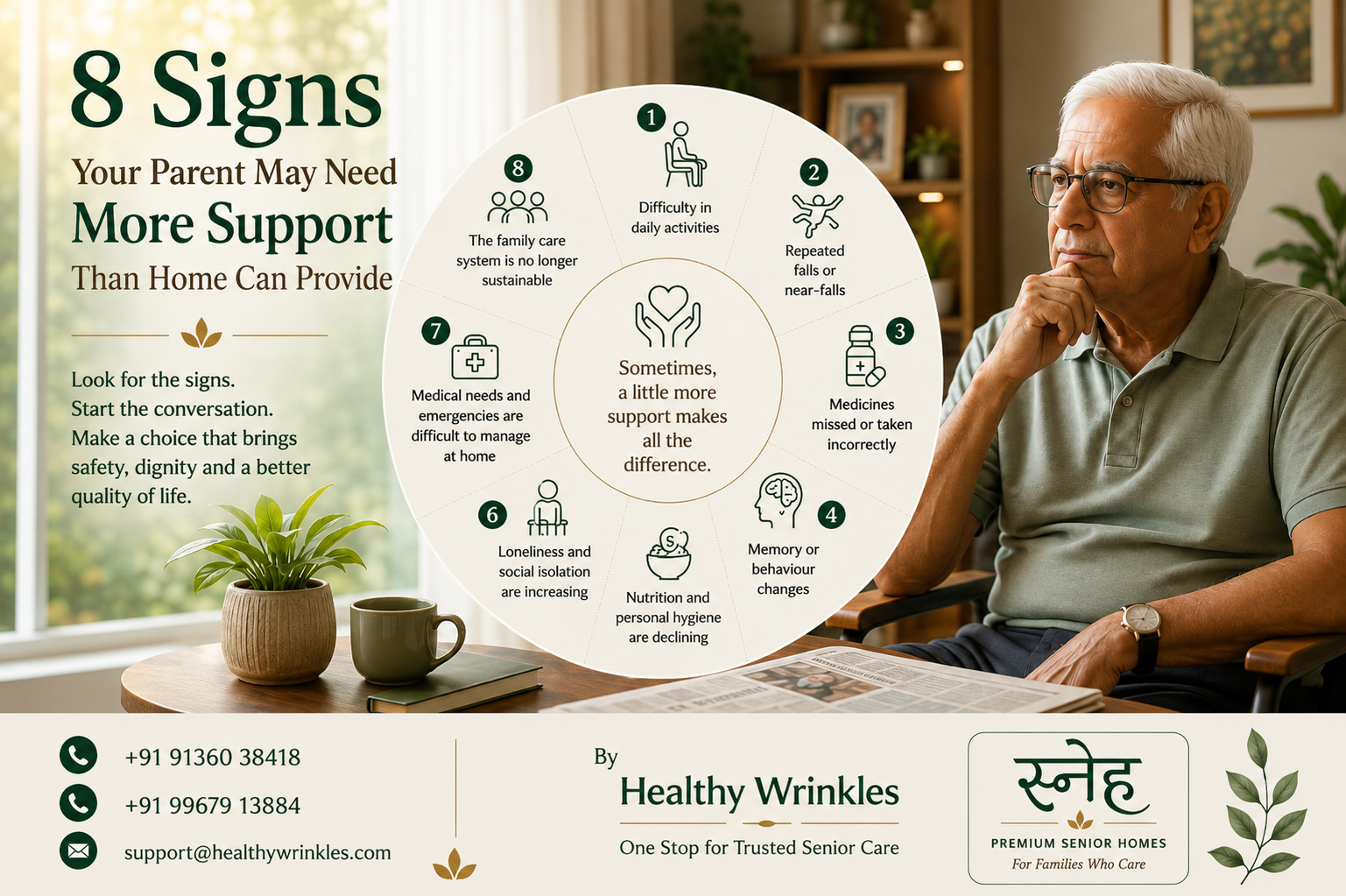
Many families delay the transition from home care to assisted living out of guilt or reluctance — and in the meantime, the senior's safety is compromised. Watch for these signs:
-
Falls happening more frequently, especially at night.
-
The senior being left alone for extended periods because caretaker coverage is inconsistent.
-
Medication errors — missed doses or double doses — becoming regular.
-
The senior showing signs of depression or severe social isolation at home.
-
Caregiver burnout in family members who are providing primary care without professional support.
When these signs appear, exploring elderly homes in Mumbai or assisted living options is not abandonment — it is appropriate escalation of care.
4. Get Expert Guidance
Choosing the right senior care option can feel overwhelming, but you don’t have to do it alone. For support and guidance, you can reach out to Healthy Wrinkles, an expert in the domain of senior care. They offer free consulting services; Saarthi, and can help you navigate the available options based on your parents’ unique needs and preferences. You can contact them at 9967913884 or email them at support@healthywrinkles.com. Visit their website at www.healthywrinkles.com for more information.
In conclusion, caring for your aging parents no longer has to be a daunting task. With a variety of options available, from home care to assisted living, you can choose the solution that best suits your parents' needs and preferences, ensuring they receive the best care possible.
Frequently Asked Questions
What is the difference between home care services and assisted living?
Home care services bring professional support — caretakers, nurses, physiotherapists — into the senior's existing home. Assisted living moves the senior to a residential facility where care, meals, and support are all provided on-site. The right choice depends on the senior's medical needs, mobility, and personal preference.
How do I choose elderly homes in Mumbai for my parents?
Evaluate the staff-to-resident ratio, medical emergency protocols, dietary management, activity programmes, location relative to hospitals, and billing transparency. A trial stay of one to two weeks is the most reliable way to assess fit before committing.
What are elderly care services in Mumbai?
Elderly care services in Mumbai include home nursing, caretaker services, physiotherapy at home, doctor on call, assisted living old age homes, premium assisted living, dementia homes, retirement communities, day centres, and rehabilitation services. The appropriate service depends on the senior's specific medical and daily living needs.
Are there affordable senior care options in Mumbai?
Yes — Mumbai has options across budgets, from NGO-run charitable homes to mid-range assisted living facilities to premium campuses. Healthy Wrinkles' free Saarthi consultation can help identify options that fit both care requirements and budget.
How do I know if my parent needs a nursing bureau or a general caretaker?
If your parent has medical needs — wound care, medication administration, post-surgical recovery, or condition monitoring — a nursing bureau that deploys trained nursing staff is the right choice. If the need is primarily daily activity support and companionship, a general caretaker service is appropriate.