




























Eight Signs Your Parent May Need Assisted Living or Senior Living Support
13-08-26
Eight Signs Your Parent May Need More Support Than Home Can Provide
Most seniors want to remain independent for as long as possible. And most families want the same. But ageing is gradual. A parent who was managing comfortably at home a year ago may slowly begin to need more support.
Often there is no single dramatic event. Instead, several small changes begin appearing together.
- A fall.
- A forgotten medicine.
- Weight loss.
- Difficulty bathing.
- Increasing loneliness.
- A worried phone call late at night.
When should a family start thinking about an assisted living home or professionally managed senior living? There is no single age or medical diagnosis that provides the answer.
The World Health Organization (WHO) takes a broader view of healthy ageing. It looks at a person's functional ability and changes in areas such as mobility, cognition, nutrition, psychological wellbeing and social support. The environment in which the senior lives is equally important.
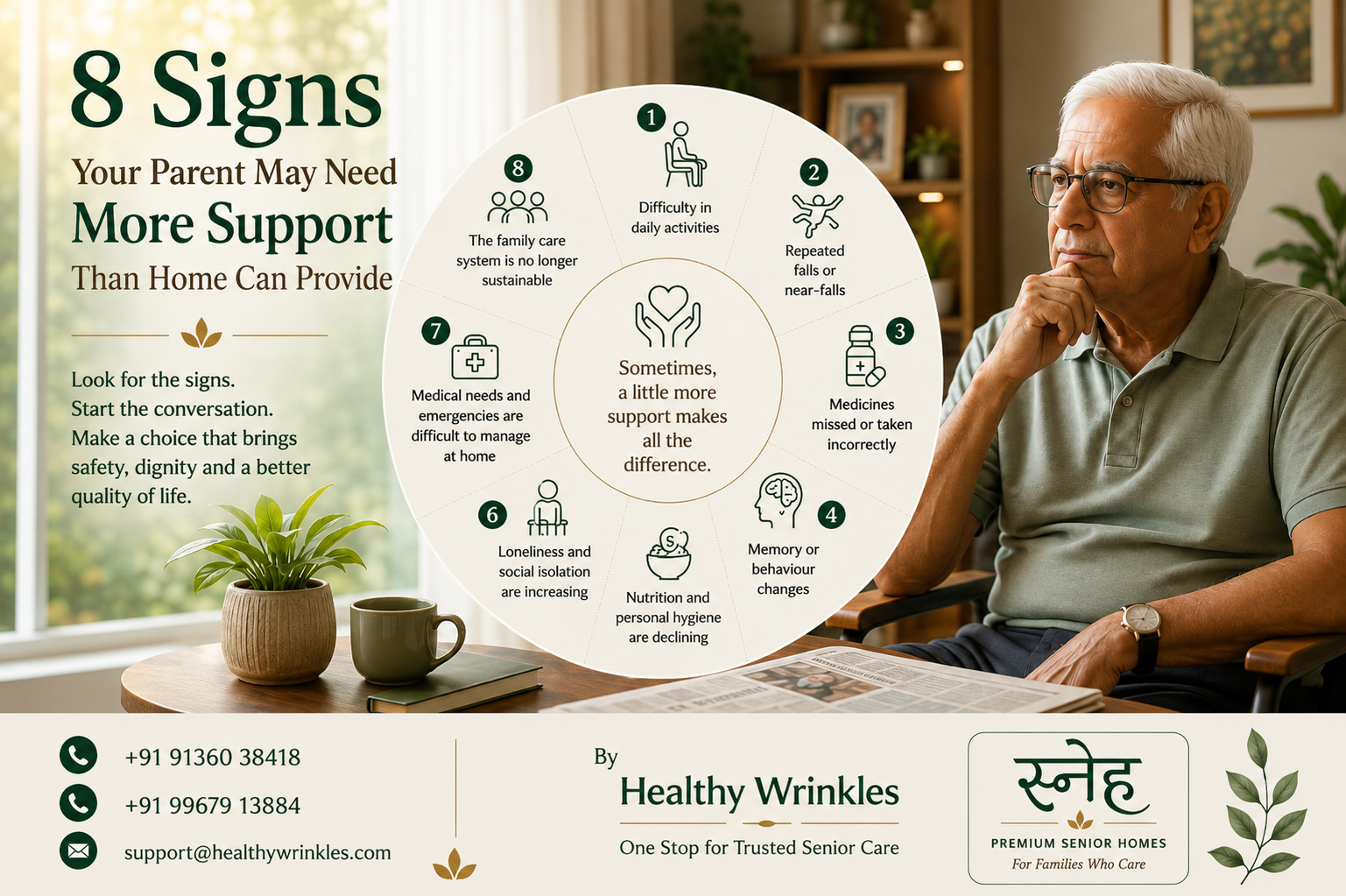
Therefore, the following eight signs do not automatically mean that your parent should leave home. But they are important signals that the present arrangement should be reassessed.
1. Daily Activities Are Becoming Difficult
Observe how comfortably your parent manages normal daily activities. Can he or she:
- Bathe independently?
- Dress without difficulty?
- Use the toilet safely?
- Walk around the house?
- Eat without assistance?
- Move from the bed to a chair?
Difficulty with these Activities of Daily Living (ADLs) is an important indicator of increasing care needs.
Sometimes home can be adapted and additional support arranged. But when help is required across several activities throughout the day, an Assisted living home may provide a safer and more dependable environment.
2. Falls or Near-Falls Are Becoming Frequent
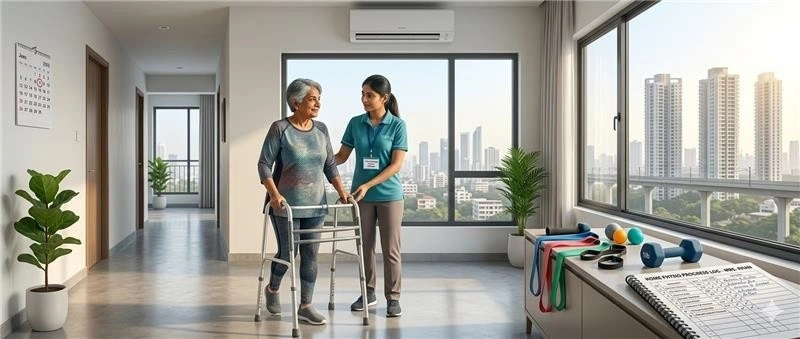
A fall should never be dismissed as "just part of getting old." A senior may begin holding furniture while walking. You may notice bruises without a clear explanation. There may be difficulty getting up from a chair or climbing stairs. Sometimes the senior may have fallen but avoids telling the family.
Repeated falls or near-falls require attention. The reasons could include muscle weakness, balance problems, poor vision, medicines, unsuitable footwear or an unsafe home environment.
A professionally managed senior living facility can provide fall-risk assessment, safer surroundings, mobility assistance and faster help when required. For families exploring Assisted Living in Mumbai, fall prevention should be one of the important questions asked while evaluating any facility.
3. Medicines Are Being Missed or Taken Incorrectly
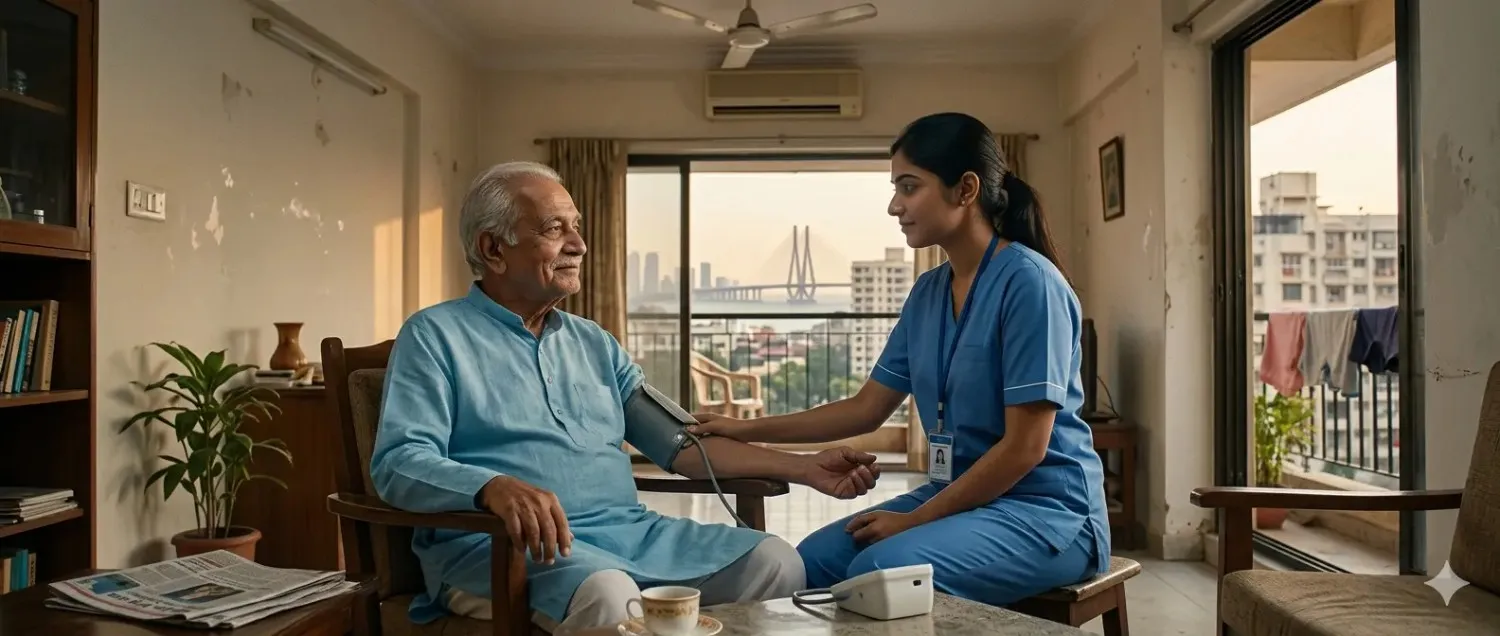
Many seniors live with more than one chronic condition. Diabetes, hypertension, heart disease, arthritis and other conditions can result in several medicines being taken at different times.
Look for warning signs: Unopened medicine strips. Duplicate doses. Confusion about timing. Prescriptions from different doctors. Medicines running out unexpectedly. A pill organiser may solve a simple problem.
But repeated medication errors may indicate that the senior now requires regular supervision.
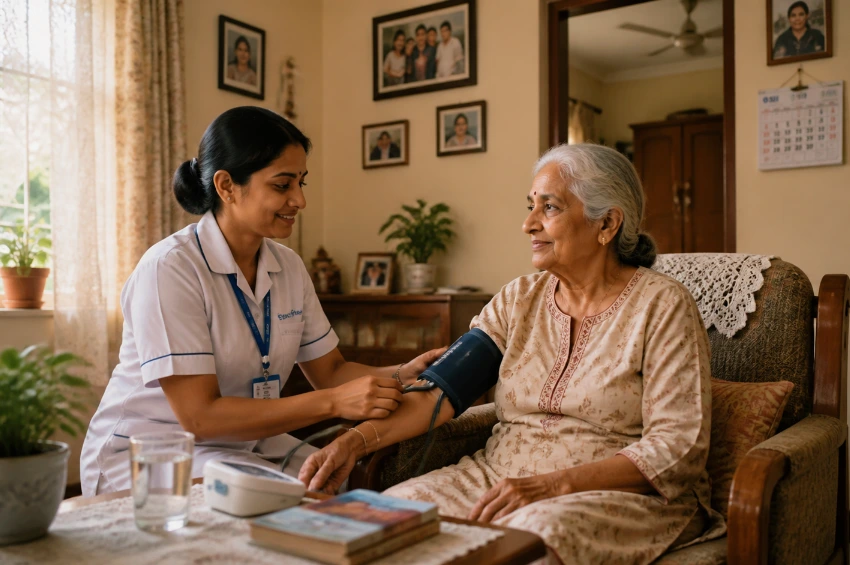
At Sneh – Premium Senior Homes in Thane, medication supervision forms part of the individualized care approach so that families have greater confidence about this important aspect of daily care.
4. Memory or Behaviour Is Changing
Occasionally forgetting a name or misplacing something does not necessarily mean dementia. However, certain changes deserve professional evaluation. Your parents may repeatedly ask the same question. Forget appointments. Become confused about dates or places. Leave the gas on. Wander outside. Become unusually suspicious or withdrawn.
WHO's approach to older-person care specifically includes assessment of cognition as one dimension of intrinsic capacity. Memory changes should therefore not simply be labelled as "old age." Early medical assessment is important.
Depending on the severity and the home environment, families may eventually need to consider structured senior living where routines, supervision and support are available throughout the day.
5. Nutrition and Personal Hygiene Are Declining
Sometimes the first warning signs are surprisingly ordinary.
- The refrigerator is almost empty.
- Meals are being skipped.
- Your parent seems to have lost weight.
- Clothes are not being changed regularly.
- Bathing has become infrequent.
The house, which was once well maintained, is increasingly untidy. These changes can arise from physical difficulty, depression, memory problems, poor appetite or simply the effort required to manage everything alone. Nutrition and personal hygiene are fundamental to health and dignity. When these start deteriorating despite family support, it is time to understand why.
6. Loneliness and Social Isolation Are Increasing
A person can be medically stable and still not be living well.
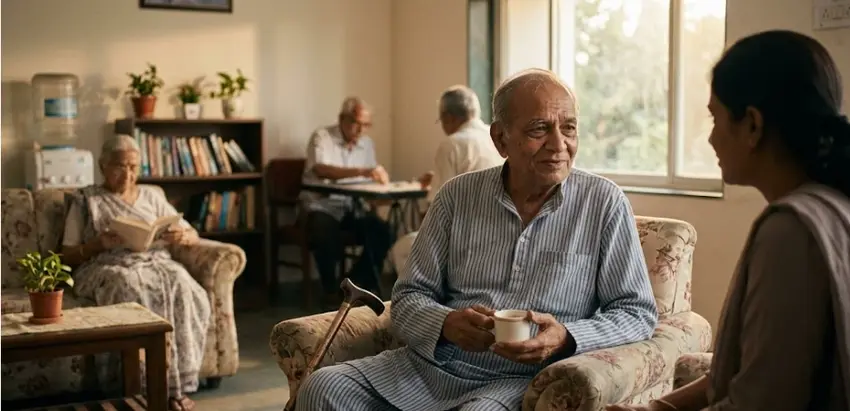
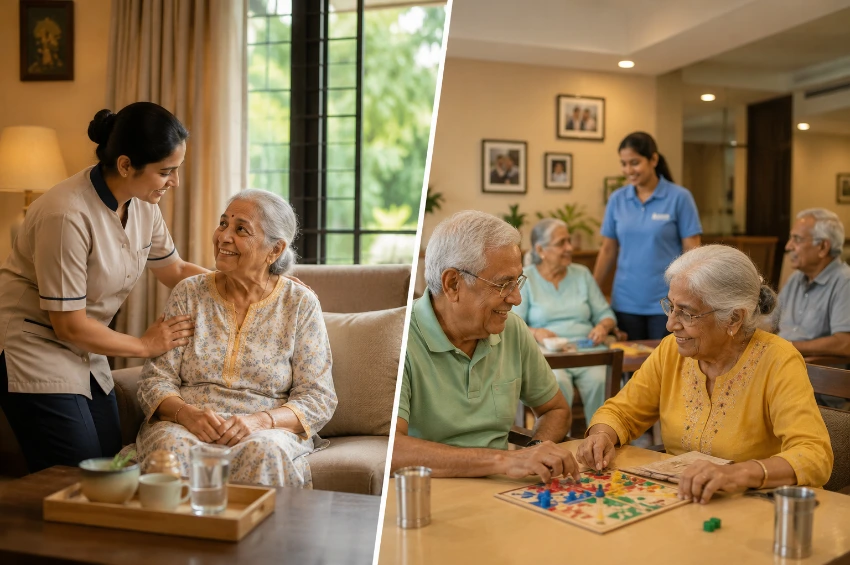
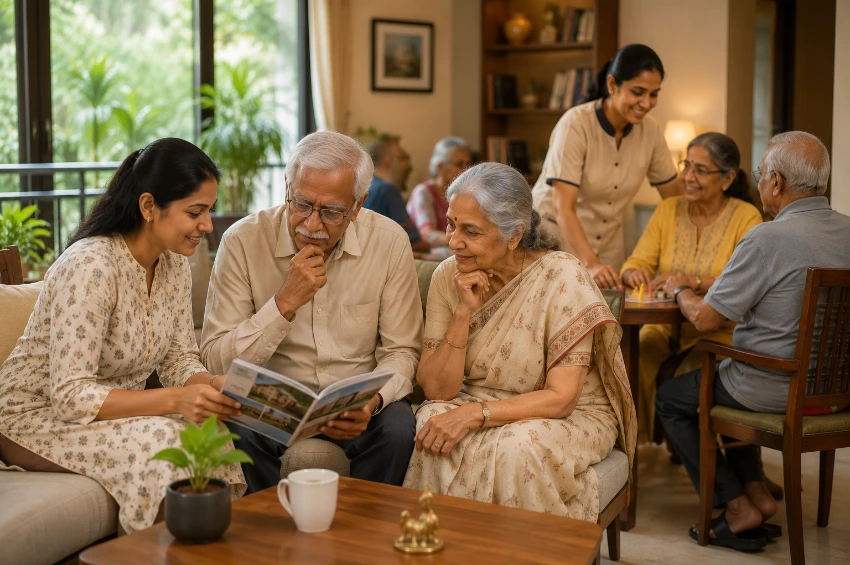
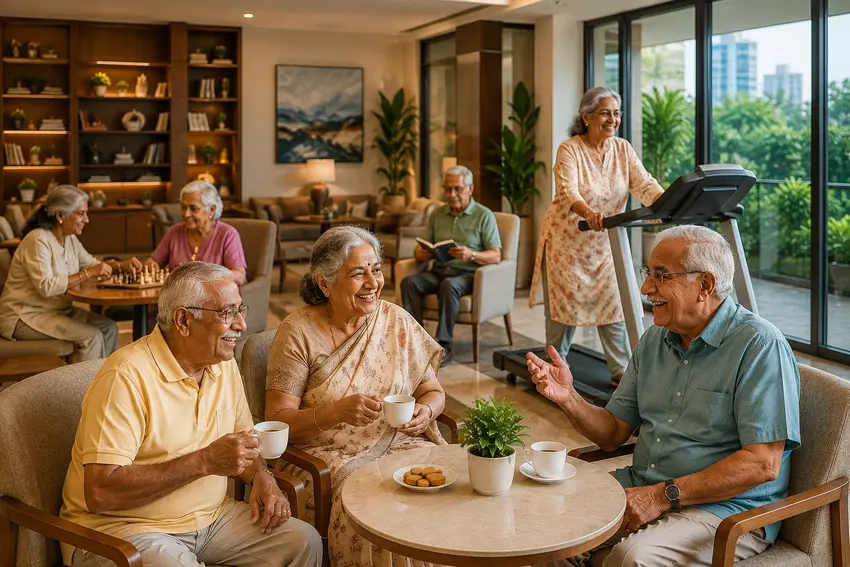
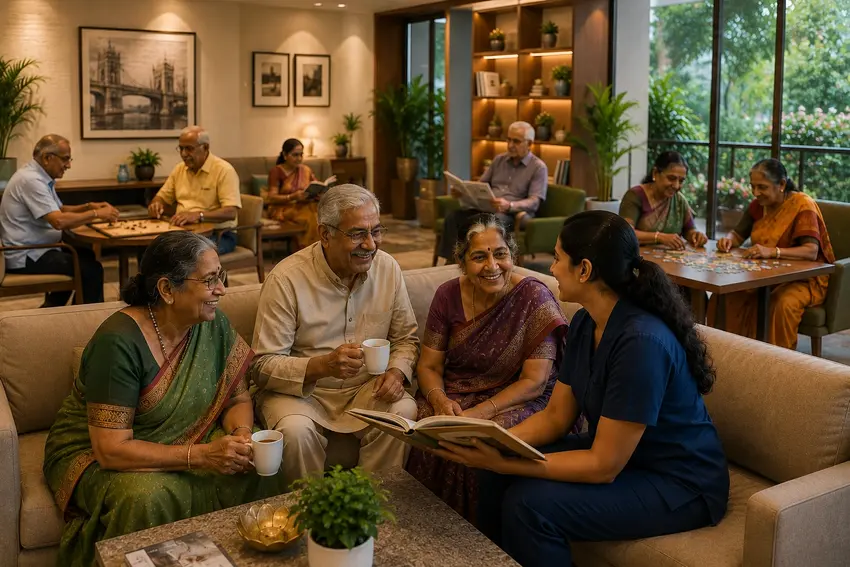
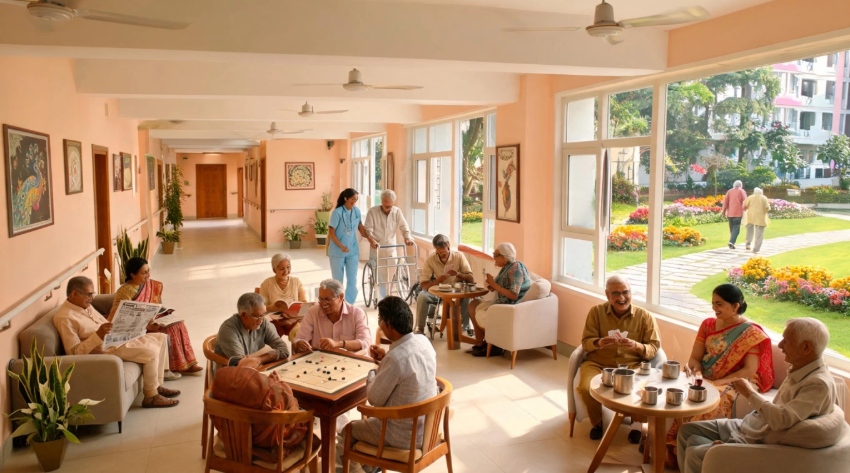
Perhaps a spouse has passed away. Friends have moved away. Mobility has reduced. Children live elsewhere. Days become repetitive, with television providing most of the companionship. Social isolation can gradually affect emotional wellbeing, appetite, activity and motivation. This is one reason why good senior living should offer much more than a room and meals. A small community, conversations, celebrations, hobbies, light exercise and meaningful activities can make everyday life more engaging.
This is an important difference families should look for while comparing an old age home in Mumbai, luxury old age homes in Mumbai, or more personalized senior-living alternatives.
7. Medical Needs and Emergencies Are Becoming Difficult to Manage at Home
Consider what happens when something goes wrong at 2 a.m.
- Who notices?
- Who responds?
- Who calls the doctor?
- Who accompanies your parent to hospital?
- And who informs the family if the children live elsewhere?
The need becomes even more evident after a stroke, surgery or hospitalisation. A senior may technically be ready for discharge but may not yet be ready to manage independently at home. Professional senior care can provide structured observation, medication support, nutrition, rehabilitation coordination and prompt escalation when health changes.
WHO's integrated-care approach similarly emphasizes coordinated, person-centred care rather than treating individual diseases in isolation.
8. The Family Care System Is No Longer Sustainable
This sign is sometimes overlooked. The senior may be receiving care, but at what cost to the family? Perhaps one daughter is managing everything. A spouse who is also elderly has become the primary caregiver. Children living abroad are coordinating attendants, doctors and emergencies remotely. Caregivers keep changing. Eventually the system becomes fragile. This does not mean the family has failed. It means the senior's care needs may have grown beyond what an informal arrangement can reliably provide.
A structured assisted living facility in Mumbai or Thane can sometimes improve life not only for the senior but also for the family by replacing constant crisis management with planned care.
How Should Families Make the Decision?
Do not wait for all eight signs to appear. And equally, do not make a decision based on one isolated incident.
Start with a comprehensive assessment. Discuss your parent's health, mobility, cognition, nutrition, emotional wellbeing and ability to perform daily activities. Understand what support is already available at home and where the gaps are. Most importantly, involve your parent in the conversation wherever possible.
The objective should not be: "We need to put you in an old age home."
A better conversation is: "What living arrangement will help you remain safe, independent, comfortable and engaged?"
That distinction matters.
Choosing Assisted Living in Thane, Mulund or Mumbai
Families today have several choices. Search terms such as luxury old age homes in Thane, Premium Assisted Living in Mulund, Assisted Living in Mumbai or luxury old age homes in Mumbai may help identify alternatives.
But do not decide based on photographs or the word "luxury" alone. Visit the facility. Understand how residents are assessed. Ask about caregiver and nursing support. Examine safety systems. Understand medication management and emergency protocols. Look at meals, cleanliness and activities. Also ask how frequently the family will receive updates.
A senior home should provide more than accommodation. It should provide a dependable ecosystem of care.
Sneh – Premium Senior Homes in Thane
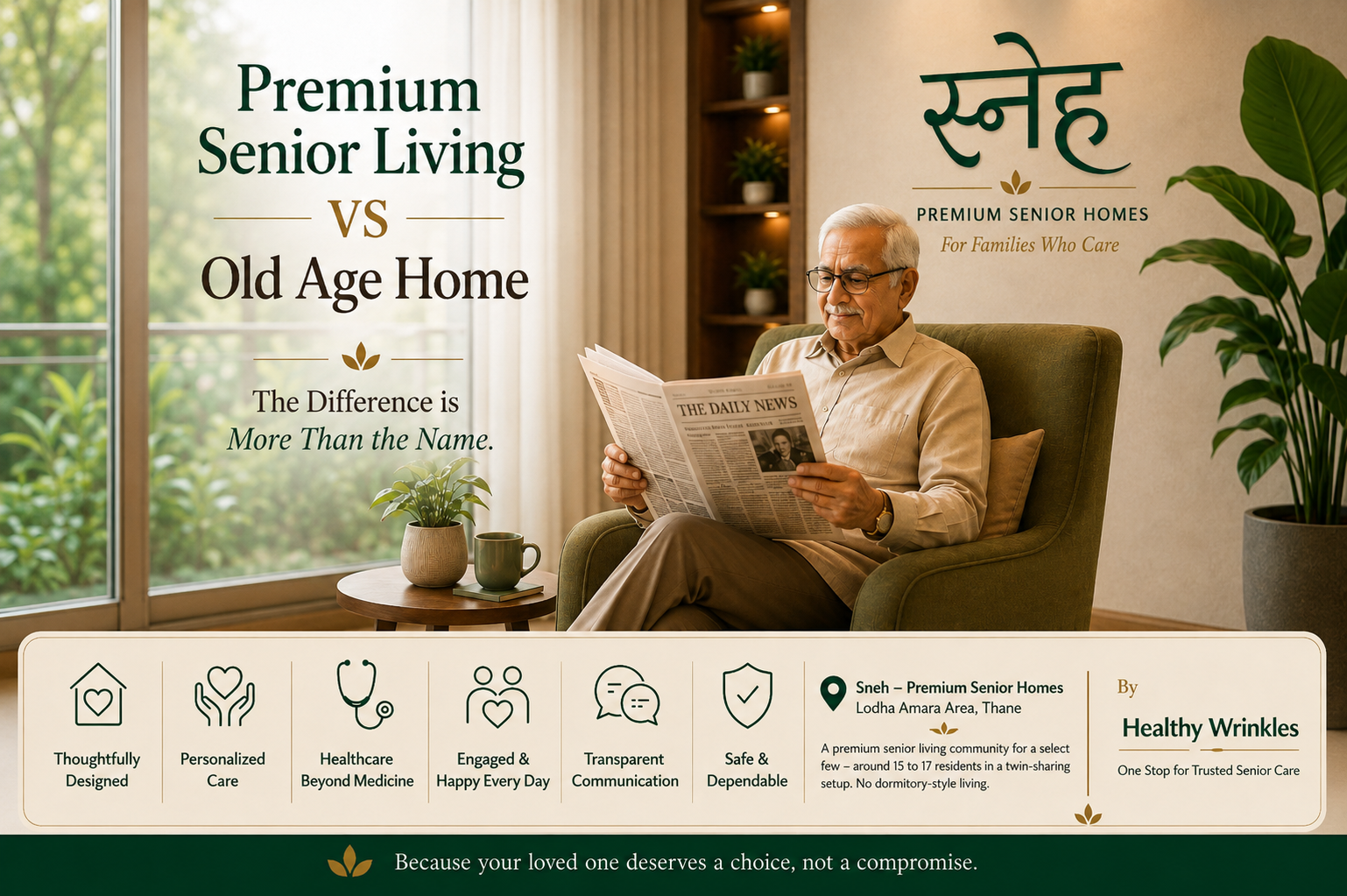
Sneh – Premium Senior Homes in Thane, from Healthy Wrinkles – One Stop for Trusted Senior Care, is being developed around a simple philosophy: senior living should remain personal.
Sneh is designed for a small community of around 15–17 residents rather than a large institutional or dormitory-style environment.
The approach combines thoughtfully designed living, individualized care plans, medication supervision, attention to nutrition and rehabilitation, fall-risk assessment, family communication and meaningful everyday engagement.
Because the decision to move outside one's own home is significant.
It should not merely solve a family's care problem. It should help the senior continue living with dignity, safety, companionship and as much independence as possible.