






































Medicine Management for Seniors in Premium Senior Homes in Mumbai
15-09-26
Medicines Need More Than Reminders: Why Professional Medicine Management Matters for Seniors
Every evening, Rohan called his 78-year-old mother, Asha, who lived alone in Mumbai.
“Aai, did you take your tablets?”
“Yes, of course,” she would reply.
Asha had always been organised. She paid her bills on time, maintained a neat home and rarely missed a doctor’s appointment. Rohan therefore assumed that her medicines were also being managed properly.
During one weekend visit, however, he opened her medicine box. Some morning tablets were still in the weekly organiser. Two strips of the same medicine were open. An older prescription was kept beside the latest one. One important tablet was almost over. Another medicine, which the doctor had recently stopped, was still in the active box.
When Rohan asked his mother about it, she became defensive.
“There are too many tablets now,” she said. “The doctor changed some of them last month. I know what I am doing.”
His mother was not careless.The routine had simply become complicated. She was taking medicines for diabetes, blood pressure, thyroid problems and joint pain. Some had to be taken before food, some after food and one only on particular days. A recent doctor visit had changed two doses.
What looked like a simple daily activity had become a system requiring attention, coordination and accuracy.
This is not just Asha’s story, but it represents a challenge faced by many seniors and their families.
Why Medicine Management Becomes More Complex with Age
Many seniors live with more than one health condition and may receive prescriptions from different doctors. They may also use vitamins, supplements or products purchased without a prescription.
The National Institute on Aging explains that older adults often take several medicines because they have multiple health conditions. This makes the routine harder to track and can increase the possibility of side effects or unintended problems.
The challenge is not merely remembering a tablet. Someone must track the current prescription, medicine names, doses, timings, food instructions, remaining stock, prescription changes and medicines that have been stopped.
Even a well-organised person can find this demanding.
A Reminder Is Not the Same as a Medicine-Management System
Children living away often remind their parents through telephone calls or WhatsApp messages.
- “Have you taken your morning medicines?”
- “Please remember the tablet after dinner.”
Such reminders are useful. But the child cannot physically verify which tablet was taken, whether the dose was correct or whether the weekly medicine box still follows the latest prescription.
The parent may sincerely say that the medicines were taken and still make a mistake.
A reminder depends upon the routine already being correct. A medicine-management system makes the routine visible, organised and verifiable.
Where Mistakes Can Occur
Medicine errors do not arise only because someone forgets.
They may occur when:
- Similar-looking tablets are confused.
- A morning dose is taken again in the evening.
- A medicine is taken from an old prescription.
- A changed dose is not reflected in the pill organiser.
- A discontinued medicine remains in use.
- A refill is not ordered in time.
- Tablets are removed from their original strips without proper identification.
- Different caregivers follow different instructions.
- A senior cannot read a small label.
- Weak hands make strips or containers difficult to open.
- Memory changes make it difficult to recall whether a dose was taken.
The World Health Organization recognises medication errors as an important source of avoidable harm and identifies polypharmacy, high-risk situations and transitions of care as priority areas for safer medication use.
The purpose of mentioning these risks is not to create fear. It is to recognise that an informal arrangement may no longer be adequate when the medicine routine becomes complex.
Changing Prescriptions Create a New Risk Point
A senior’s prescription may change after a doctor visit, hospital admission, test result or change in health condition.
One medicine may be stopped, another introduced or a dose or timing changed. The medication chart and pill box must then be updated, discontinued medicines separated and everyone involved in care informed.
Transitions after hospital discharge require particular attention. The discharge prescription may differ from what the senior was taking earlier at home.
No medicine should be added, stopped or altered without appropriate instructions from the prescribing doctor. The role of the care team is to accurately implement and document the prescribed plan - not independently change it.
Monthly Supplies Also Need Management
Someone must monitor stock, order refills before medicines run out and verify that the supplied medicine and strength match the current prescription.
Expired, discontinued and active medicines should not remain mixed together. A monthly inventory makes the system more reliable without creating unnecessary stock that may become unusable after a prescription change.
How Professional Medicine Management Supports Seniors
A professionally managed Premium Senior Home can place a structured routine around medicine use.
The exact process should follow the facility’s protocol and the doctor’s prescription, but important components may include the following.
1. Maintaining One Current Medication Record
The team keeps an updated list of prescribed medicines, doses and timings.
When a prescription changes, the medication record should be updated and the previous routine clearly withdrawn. This reduces dependence on memory or multiple handwritten instructions.
2. Monitoring and Ordering Supplies
Remaining stock can be checked at regular intervals. Medicines can then be ordered before supplies run out and matched against the current prescription.
This is particularly helpful for children who otherwise try to manage refills remotely.
3. Preparing Weekly Pill Organisers
Weekly pill boxes can simplify a complex schedule, but they must be filled carefully against the current prescription - not from memory.
Any doubt about the medicine, strength or timing should be clarified first.
4. Supporting Daily Consumption
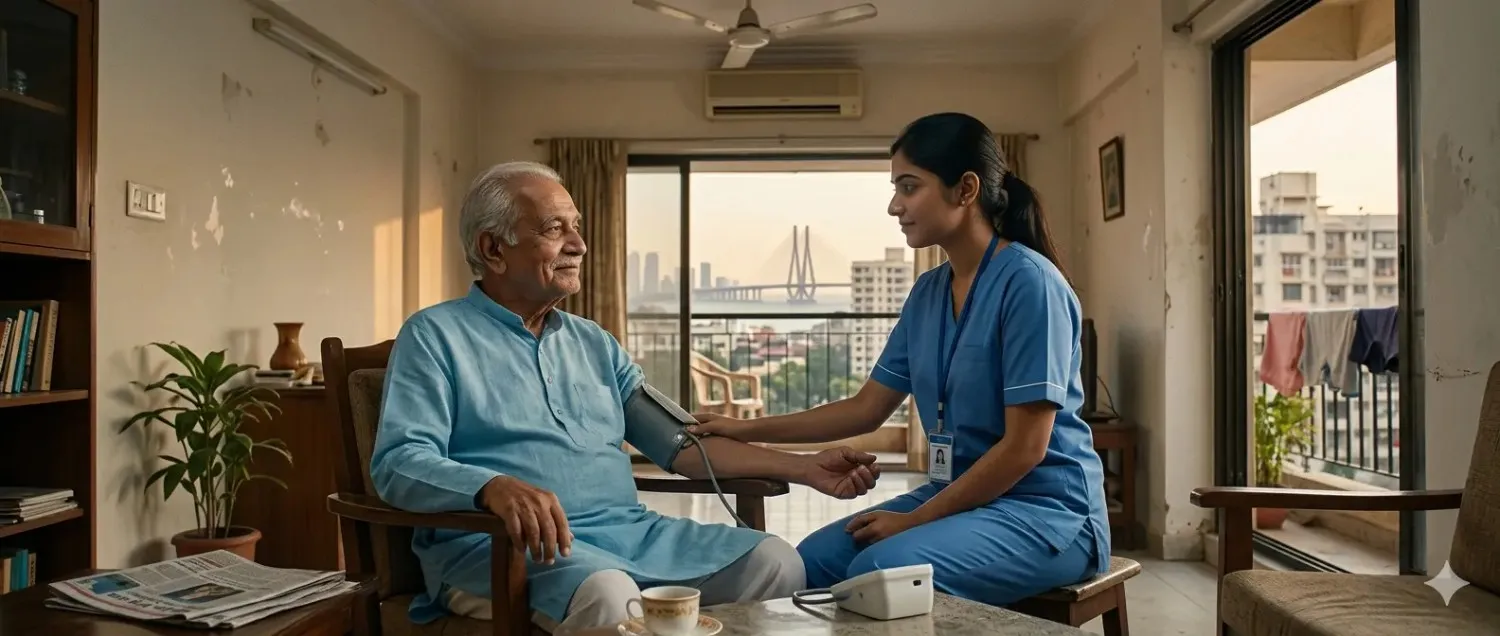
At the appropriate time, the team can offer the prescribed medicine and support or supervise consumption according to the resident’s assessed needs and the facility protocol.
This helps answer an important question: not only whether the medicine was offered, but whether it was actually taken.
5. Recording and Communicating
A medicine-administration record can show what was given and when. A missed dose, refusal, swallowing difficulty or other concern can be documented and escalated according to protocol.
The team can communicate relevant changes to the family and bring appropriate concerns to the doctor’s attention.
Compassion Is as Important as Control
Medicine management should not make a senior feel policed. A compassionate approach explains the purpose, respects privacy and involves the senior as far as possible.
Instead of saying, “You cannot manage your medicines,”
the family can say: “Your medicines have become more complicated.
Let us create a system so you do not have to carry the entire responsibility alone.”
Medicine Management at Sneh – Premium Senior Homes
At Sneh – Premium Senior Homes, located Near Lodha Amara, Thane, professional medicine support forms part of the daily care protocol.
The medicine-management system is designed to support:
- Procurement of prescribed medicines
- Monthly stock monitoring
- Weekly pill-box organisation
- Daily support for prescribed medicine consumption
- Updating the medication routine after a doctor changes the prescription
- Recording and communicating relevant concerns
- Coordination with the doctor and family
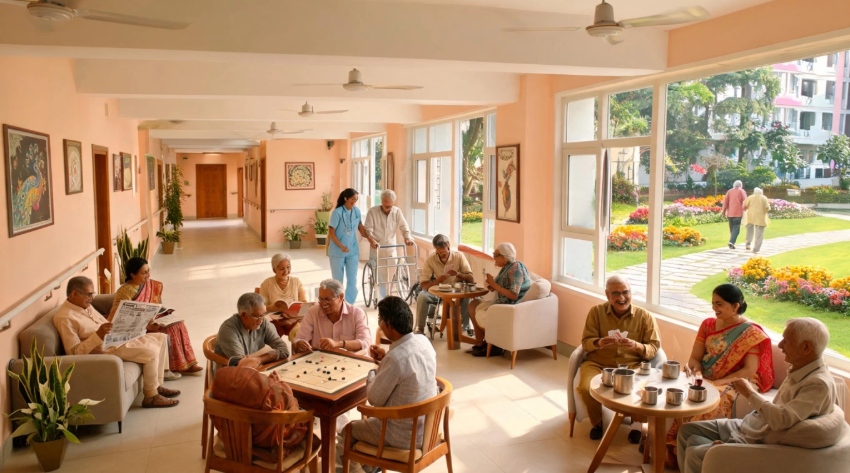
This support sits alongside 24×7 nursing availability, daily doctor visits, nutritious meals, emergency preparedness and assistance with activities of daily living when required. The environment remains warm and homelike; the objective is systematic support without making everyday life feel clinical.
For families exploring Premium Senior Homes in Thane, Senior Assisted Living in Mumbai, Premium Assisted Living near Mulund, Senior Old Age Homes near Mumbai or senior-care options accessible from Navi Mumbai, medicine management should be an important part of the evaluation.
Questions Families Should Ask
Families should ask who maintains the current medication chart, fills pill organisers, records daily consumption and monitors refills. They should also understand how prescription changes, missed doses, discontinued medicines and communication with the doctor and family are handled. Look for a defined process rather than a general assurance that “medicines are taken care of.”
Right Medicine. Right Dose. Right Time.
For Rohan, peace of mind would not come merely from calling his mother every evening and asking whether she had taken her tablets.
It would come from knowing that:
- Her latest prescription was being followed
- The weekly organiser had been correctly prepared
- Medicines would not unexpectedly run out
- Daily consumption was supported and recorded
- Prescription changes would be incorporated promptly
- A professional team could identify and communicate concerns
Medicines help manage disease only when they are used as prescribed.
For seniors taking several medicines, good intentions and reminders may no longer be enough.
What they need is a dependable system-delivered with professional discipline and human compassion.
Sneh – Premium Senior Homes
Near Lodha Amara, Thane For Families Who Care
By Healthy Wrinkles – One Stop for Trusted Senior Care
Phone: +91 9136038418 | +91 9967913884
Email: support@healthywrinkles.com
Website: www.healthywrinkles.com