






















What is Premium Assisted Living and How it Differs from Regular Old Age Homes
07-03-26
When families begin exploring senior living options, they often come across terms like premium assisted living, retirement communities, and old age care homes. While these phrases may sound similar, they represent very different experiences, services, and levels of support. Understanding the difference is essential before making a long-term decision for a loved one.
This guide explains what premium assisted living really means, how it differs from regular old age homes, and what families should consider when choosing the right environment.
Understanding Premium Assisted Living
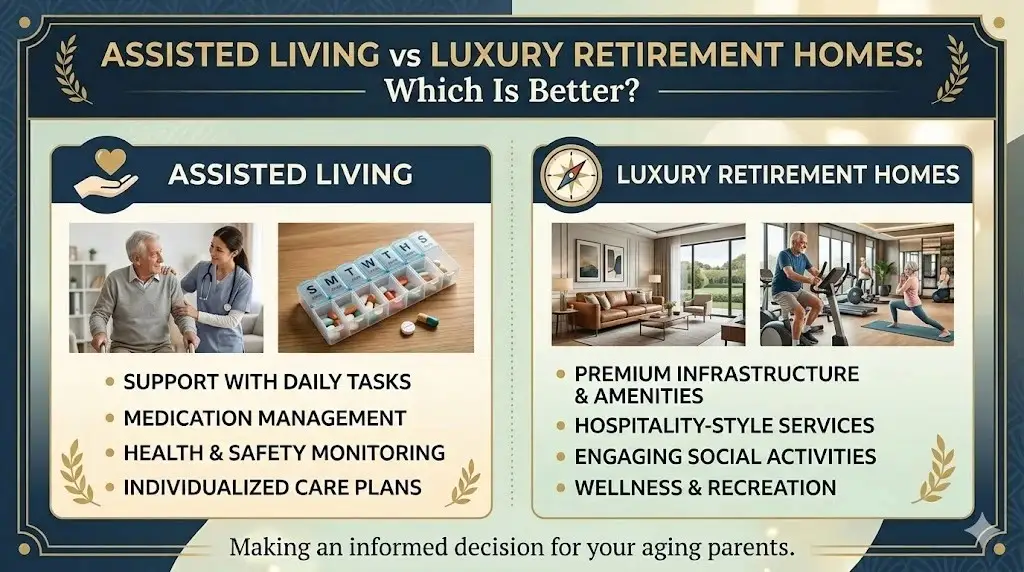
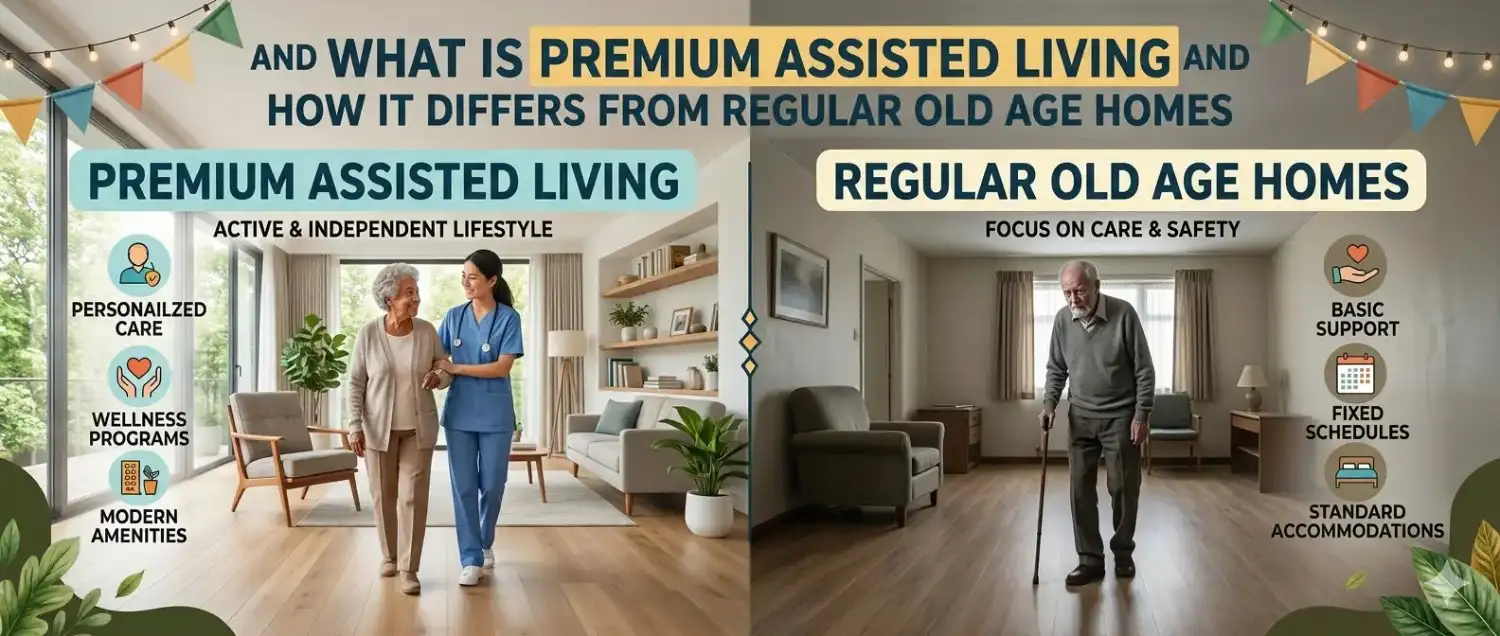
Premium assisted living is designed for seniors who want a balance between independence and structured support. Unlike traditional care facilities, it focuses not only on safety and medical assistance but also on lifestyle, comfort, and dignity.
In a premium assisted living setup, residents typically live in private or semi-private rooms or apartments. They receive help with daily activities such as bathing, dressing, medication management, and mobility support. At the same time, they enjoy amenities like nutritious meals, housekeeping, social activities, fitness programs, and round-the-clock security.
The idea is simple: seniors should not feel like they are “admitted” somewhere. They should feel like they are living in a comfortable community with care available whenever needed.
What Are Regular Old Age Care Homes?
Old age care homes are generally more basic facilities meant to provide shelter and essential support to elderly individuals who may not have family support or financial flexibility. These homes focus primarily on accommodation, food, and basic supervision.
While many old age care homes do their best within available resources, they may not offer personalized attention, advanced medical coordination, or lifestyle-based engagement programs. The infrastructure may be simpler, and the caregiver-to-resident ratio can be higher.
This does not mean that all old age homes lack quality, but the experience and service level are usually different from premium facilities.
Key Differences Between Premium Assisted Living and Old Age Homes
1. Living Environment
Premium assisted living facilities are thoughtfully designed spaces with comfortable interiors, accessibility features, emergency response systems, and community areas. Residents often have access to gardens, activity rooms, therapy areas, and dining halls that resemble hospitality environments.
In contrast, regular old age care homes may have shared dormitory-style arrangements or simpler rooms with fewer amenities.
2. Level of Personalization
One of the defining aspects of premium retirement homes is personalization. Care plans are tailored after evaluating a resident’s medical history, lifestyle preferences, dietary needs, and mobility level. Regular assessments help adjust support as conditions change.
Old age homes usually follow more standardized routines. Individual attention may be limited depending on staffing and resources.
3. Medical Supervision and Support
Premium assisted living communities often coordinate closely with doctors, physiotherapists, and dietitians. Medication management is monitored, emergency response systems are in place, and residents can access structured health programs.
Old age homes may provide general supervision but might not have continuous medical coordination or structured wellness programs.
4. Lifestyle and Engagement
Social engagement is central to premium assisted living. Residents participate in hobby classes, music sessions, yoga, celebrations, and group activities. This helps prevent isolation and improves emotional well-being.
At many old age care homes, activities may be limited to basic recreation depending on available staff and funding.
Why Families Are Choosing Premium Retirement Homes
Modern families are increasingly exploring premium retirement homes because they want more than just shelter for their elders. They want safety combined with dignity, medical support combined with independence, and care combined with companionship.
Urban lifestyles, nuclear family structures, and work commitments often make full-time home caregiving difficult. Premium assisted living bridges that gap by offering structured support without taking away a senior’s sense of autonomy.
When Is Premium Assisted Living the Right Choice?
Premium assisted living is ideal when:
- A senior needs help with daily tasks but does not require hospital-level care.
- There is a need for structured medication management.
- Mobility issues increase fall risk at home.
- Family members live abroad or in different cities.
- Loneliness or social isolation becomes a concern.
It provides a middle path between independent living and intensive nursing care.
How to Evaluate the Right Facility for Your Loved One?
Before selecting a facility, families should visit the location, interact with staff, understand emergency protocols, and review the care model. Ask about caregiver training, medical tie-ups, safety systems, and daily routine structure.
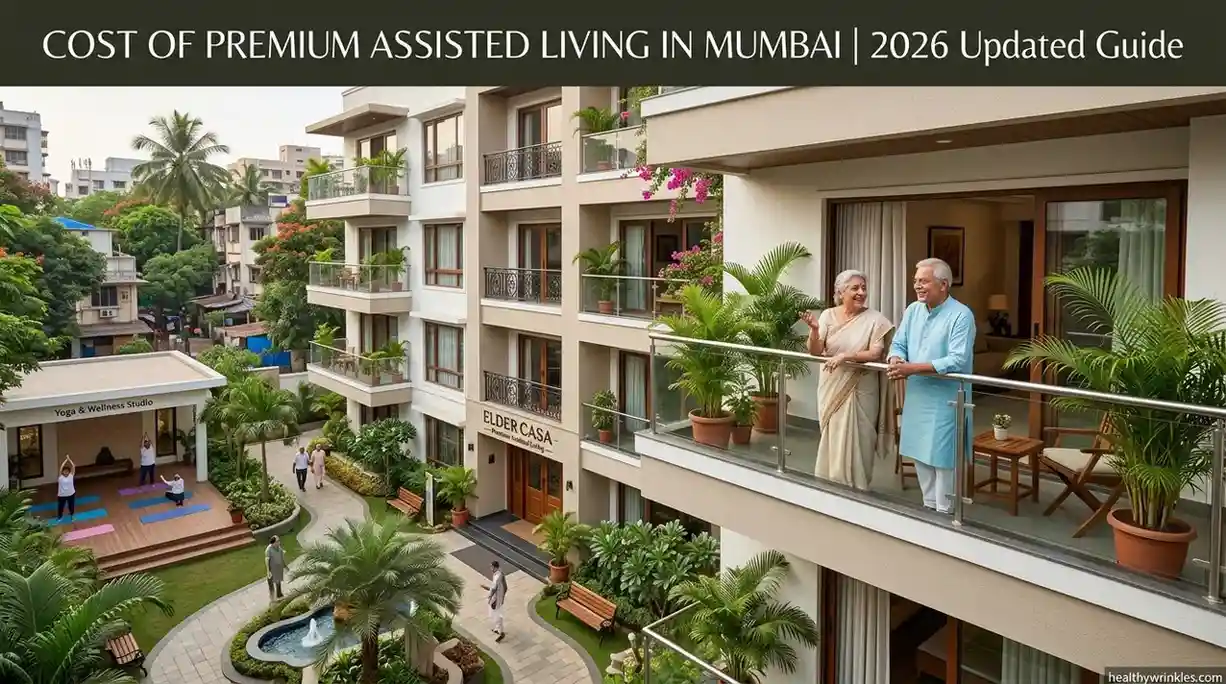
If you are searching for top assisted living services in Mumbai, ensure the facility offers transparent pricing, trained staff, and a supportive community environment.
Similarly, when comparing elderly homes in Mumbai, assess whether the facility provides only accommodation or a complete care ecosystem including nutrition, therapy, and structured engagement.
1. Cost Considerations
Premium assisted living typically involves higher costs compared to regular old age homes. The difference in pricing reflects better infrastructure, trained caregivers, lower resident-to-staff ratios, enhanced safety systems, and lifestyle amenities.
However, the long-term value often lies in reduced hospital visits, improved emotional health, and better overall quality of life.
Families should not evaluate cost alone but consider the level of care, safety, and dignity being offered.
2. Emotional Impact on Seniors
One common concern families have is whether seniors will feel abandoned in assisted living. In reality, many residents experience improved mood and stability once they are in a structured and socially active environment.
Living among peers, following a routine, and receiving consistent support often reduces anxiety and improves confidence.
In premium assisted living communities, residents are encouraged to maintain independence while knowing help is always available.
3. The Growing Need for Structured Senior Care
India’s aging population is steadily increasing, especially in urban centers. As healthcare awareness improves and life expectancy rises, the demand for organized senior care solutions continues to grow.
Premium assisted living is not just a luxury concept; it represents an evolving approach to aging with dignity. It acknowledges that seniors deserve comfort, medical coordination, social engagement, and safety in one integrated space.
Final Thoughts
Choosing between premium assisted living and elderly homes in Mumbai depends on a senior’s health condition, financial capacity, and personal preference. While regular homes may provide basic shelter and supervision, premium retirement homes offer a more comprehensive model of care that blends lifestyle, medical support, and community living.
The decision should be thoughtful and based on what ensures safety, comfort, and emotional well-being for your loved one.
At Healthy Wrinkles, we understand that senior care is not just about services; it is about trust. Our approach focuses on compassionate support, structured living, and creating an environment where seniors feel respected and valued. If you are exploring options for premium assisted living or need guidance on choosing the right care model, our team is here to help you make an informed and confident decision.